Graphics cards have traditionally been viewed as purely performance-focused hardware. Manufacturers compete on cooling efficiency, clock speeds, thermal designs, and aesthetics, while enthusiasts focus on extracting every last frame per second from their systems.
At COMPUTEX 2026, Palit took a different approach.
Rather than showcasing only its latest GeForce RTX products, the company highlighted something far more personal: creativity.
Through its growing Maker initiative, Palit demonstrated how graphics cards can become canvases for artistic expression, inviting creators, modders, and makers from around the world to reimagine what a graphics card can be. Alongside these stunning custom creations, the company also showcased its vision for edge AI computing through the new Pandora platform powered by NVIDIA Jetson Orin NX Super.
The result was one of the most unique exhibits at COMPUTEX this year—one that celebrated both artistic imagination and technological innovation.
Beyond Gaming: What is Palit Maker?
For decades, graphics card manufacturers have focused primarily on gaming performance and cooling technologies. Palit's Maker initiative takes a different path by encouraging users to personalize and physically modify their graphics cards using 3D printing, custom fabrication, and artistic design.
The concept is surprisingly simple.
Modern graphics cards have become some of the most visually prominent components inside a PC. Rather than treating them as fixed pieces of hardware, Palit provides Maker files and resources that allow creators to build custom shrouds, enclosures, decorations, and themed modifications around compatible graphics cards.
The initiative effectively transforms the graphics card into a platform for creativity.
At COMPUTEX 2026, Palit showcased several outstanding examples of what happens when talented creators are given complete freedom to reinterpret gaming hardware.
Borderlands 4 Comes to Life
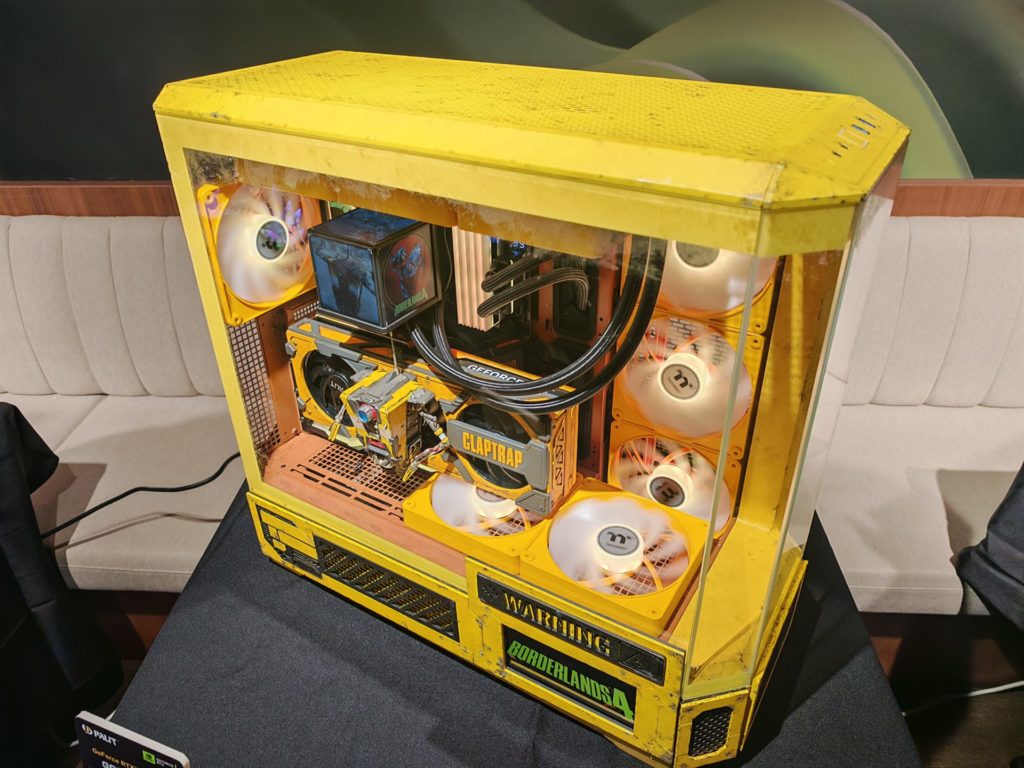
One of the most eye-catching exhibits at the showcase was a collection of Borderlands 4-themed custom graphics card projects.
The first featured Claptrap, arguably the most recognizable robot in the Borderlands franchise.
Rather than simply decorating the GPU, the creator transformed the entire system into a functioning tribute to the beloved character. Weathered textures, industrial design elements, and the franchise's distinctive post-apocalyptic aesthetic combined to create a build that looked as though it had been pulled directly from the world of Pandora.
The level of craftsmanship demonstrated how far modern PC modding has evolved beyond simple RGB lighting and cosmetic decals.
Every surface, panel, and component contributed to the storytelling.
ECHO-4: A Post-Apocalyptic Mechanical Companion
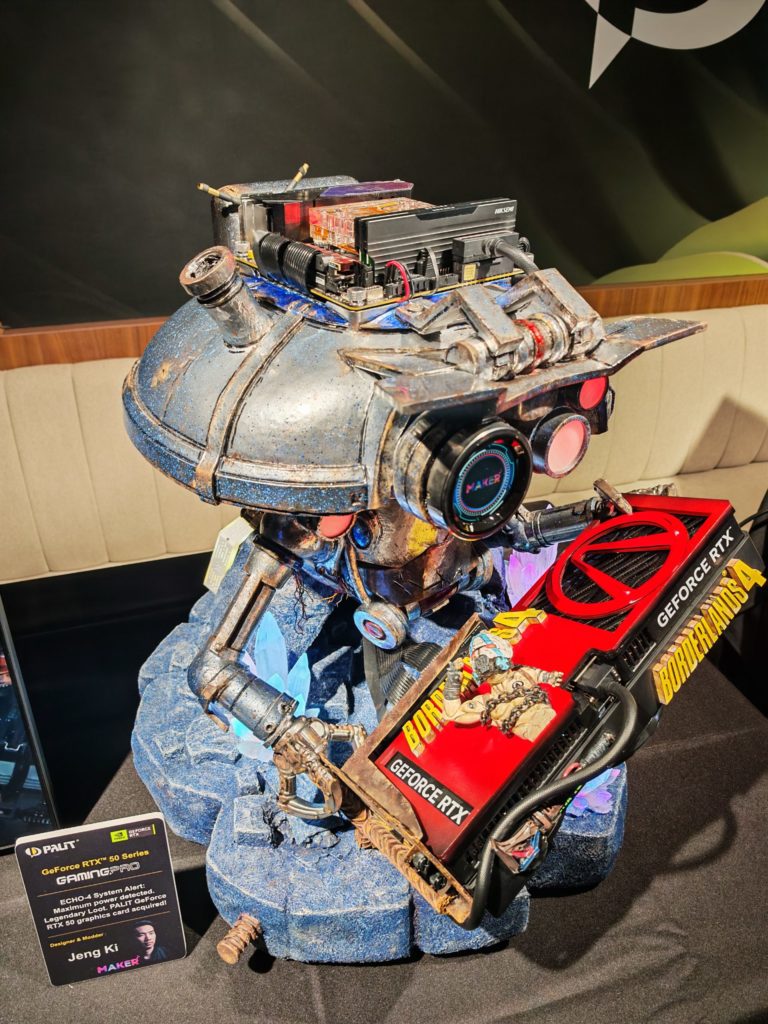
Perhaps the most impressive Borderlands-inspired project was the ECHO-4 system.
Built around a large robotic sculpture, the graphics card became an integrated component of a much larger mechanical creation. The weathered metallic finish, exposed mechanical details, and industrial styling perfectly captured the rugged visual language that fans of the Borderlands universe immediately recognize.
What makes projects like ECHO-4 particularly fascinating is that they blur the line between PC hardware and sculpture.
At first glance, visitors might not even realize they were looking at a functioning computer component. Only upon closer inspection does the graphics card reveal itself as part of the larger artwork.
The project perfectly embodied the spirit of the Palit Maker program: technology serving as a foundation for creativity rather than limiting it.
Diablo IV Takes Centre Stage
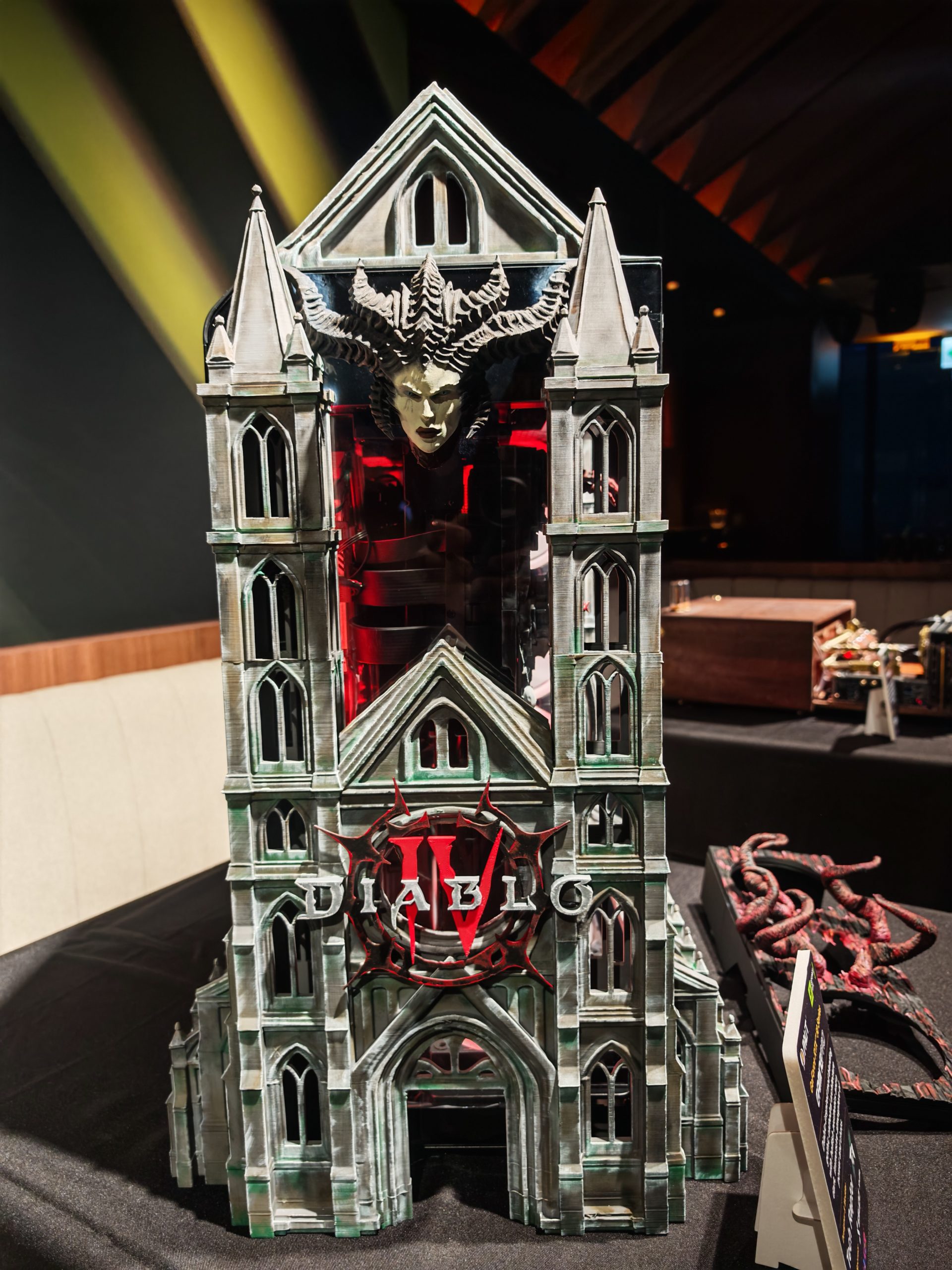
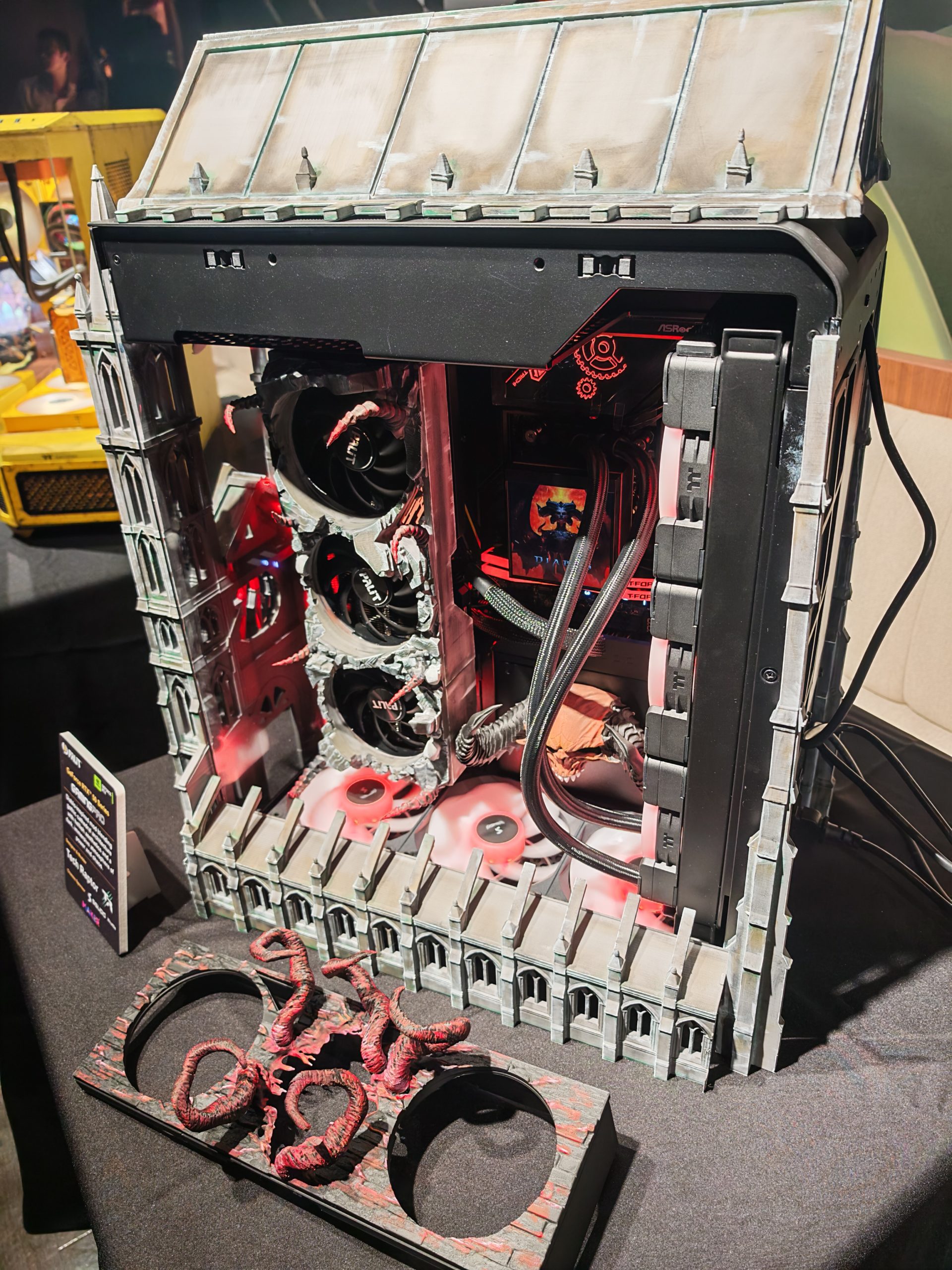
Not all of the showcased projects were science fiction inspired.
One of the standout creations transformed a PC chassis into a towering Diablo IV cathedral.
Featuring gothic architecture, towering spires, stone textures, and a dramatic representation of Lilith herself, the mod captured the dark fantasy atmosphere of Blizzard's action RPG remarkably well.
The graphics card disappeared into the overall structure, becoming part of a larger architectural centerpiece rather than the focus of the build.
This project demonstrated another aspect of the Maker initiative: the ability to integrate hardware into immersive thematic environments where the technology enhances the narrative rather than dominating it.
For Diablo fans, it was easily one of the most memorable builds on display.
A Steampunk-Inspired Audio Masterpiece
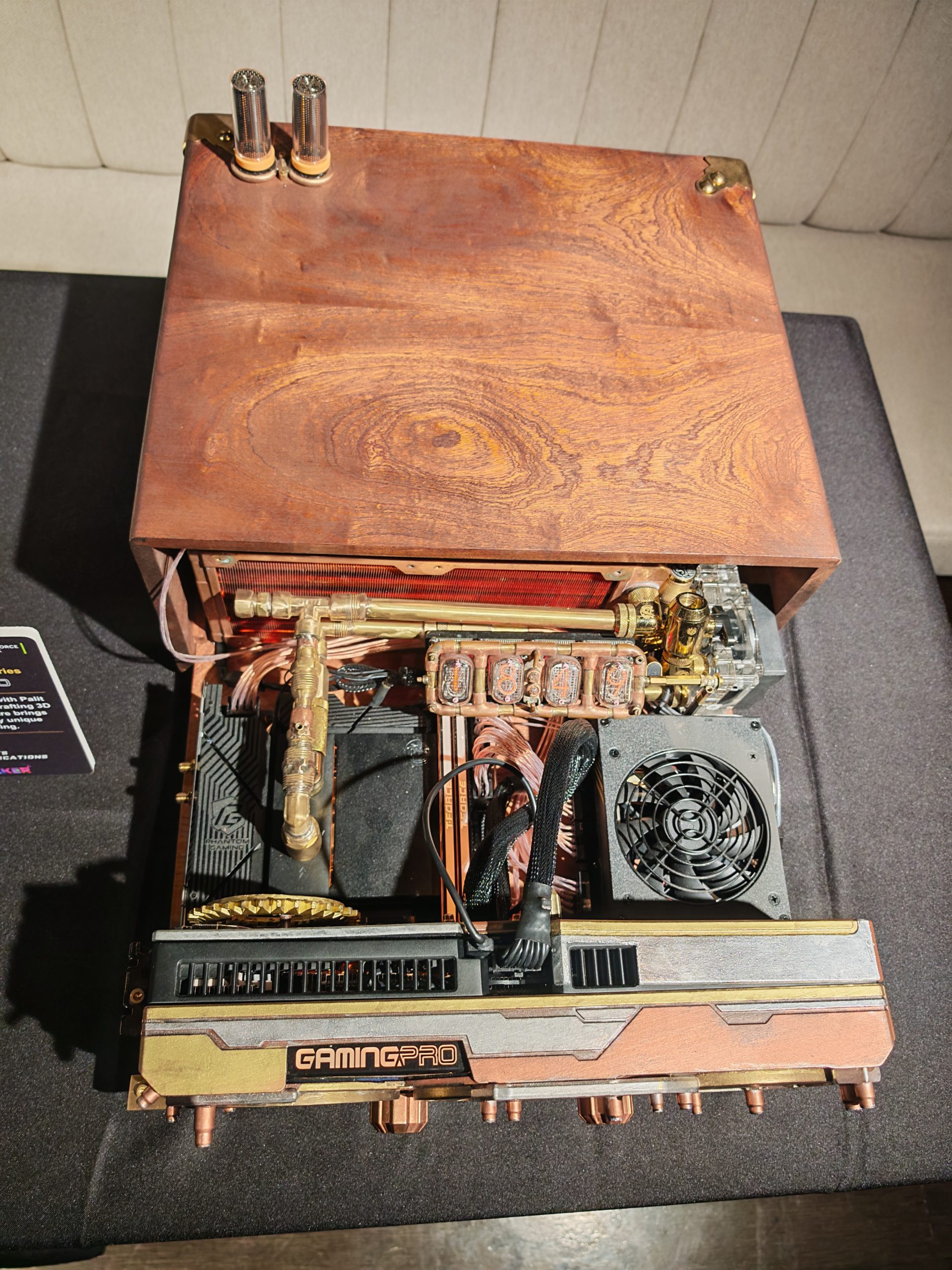
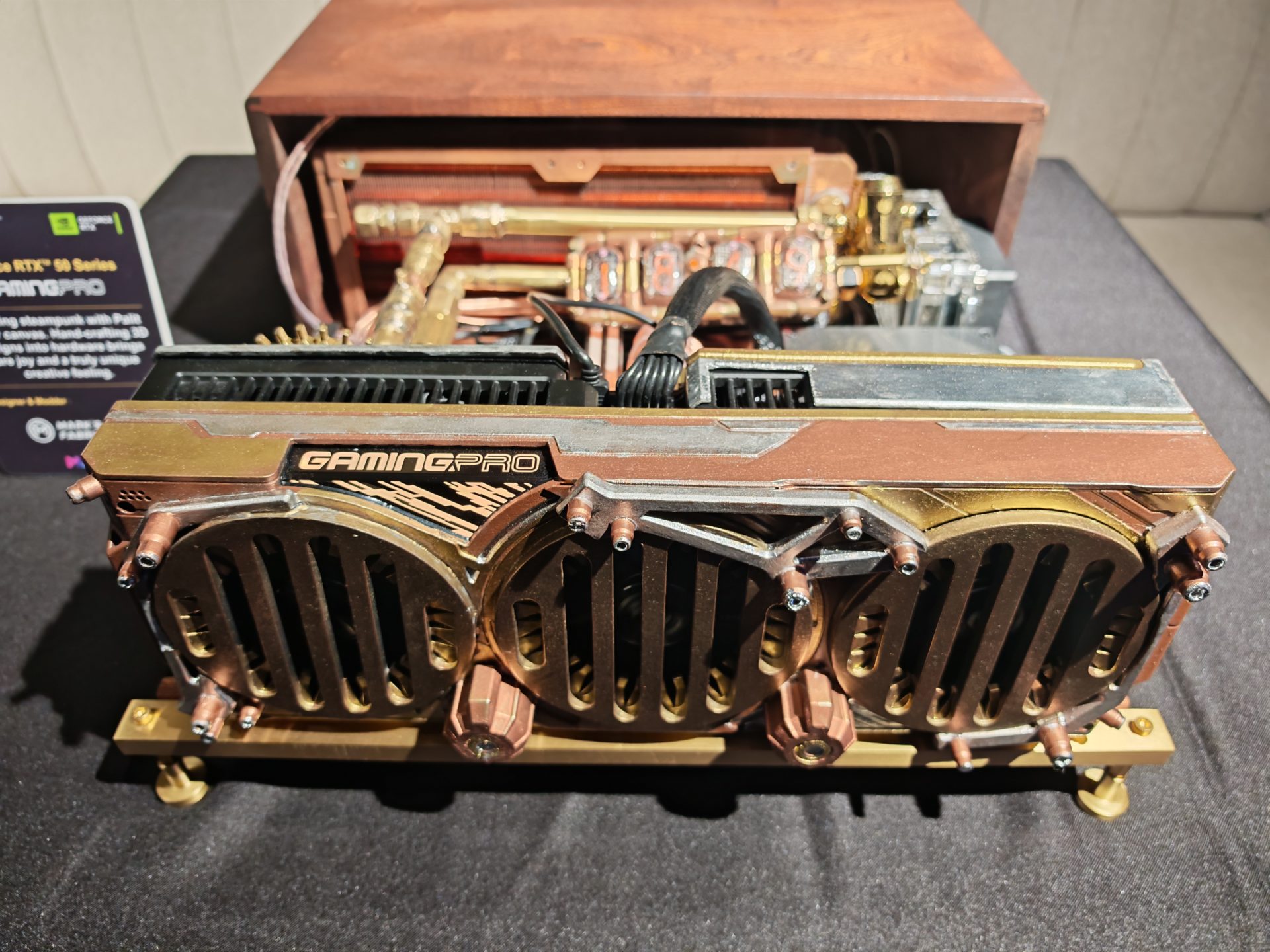
The final featured mod showcased a completely different design philosophy.
Inspired by vintage audio equipment and steampunk aesthetics, the build incorporated wood textures, copper accents, brass-colored detailing, and exposed mechanical elements. The graphics card itself was transformed into what appeared to be a component of a handcrafted audio amplifier from an alternate industrial era.
The project highlighted the versatility of the Maker platform.
While gaming franchises and popular culture provide obvious inspiration, creators are equally free to explore entirely original artistic directions. The result was a build that felt less like a gaming PC and more like a functional piece of industrial art.
Discovering Generative AI at the Edge
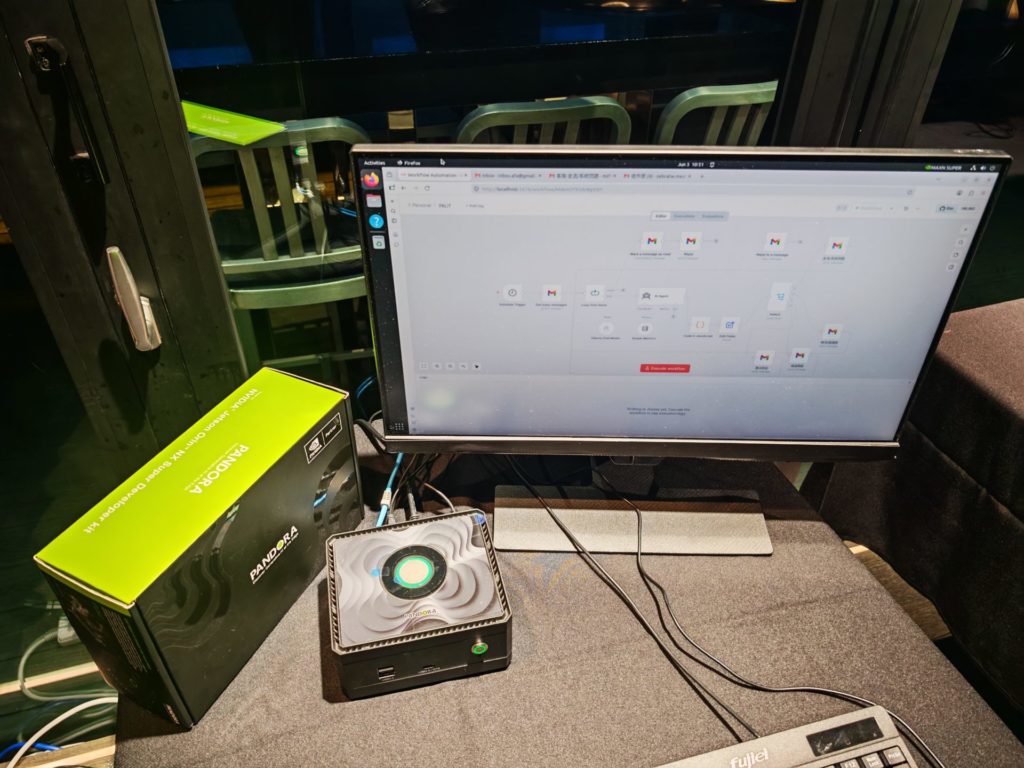
Beyond custom graphics card projects, Palit also showcased its latest efforts in edge AI computing.
At the center of this demonstration was Pandora, Palit's implementation of the NVIDIA Jetson Orin NX Super platform.
Positioned under the theme "Discover Generative AI at the Edge," Pandora is designed to bring AI processing closer to where data is generated, reducing dependence on cloud infrastructure while enabling real-time intelligent workflows.
During the demonstration, Pandora was shown executing workflow automation tasks through a visual orchestration platform. The system demonstrated how AI agents, automation tools, and business workflows can be deployed locally, allowing organizations to run intelligent processes without relying entirely on external cloud resources.
This approach aligns with one of the broader themes seen throughout COMPUTEX 2026: the growing importance of edge AI.
As organizations seek lower latency, improved privacy, and reduced cloud costs, platforms like Pandora provide an attractive alternative for deploying AI closer to the point of use.
The Future of Personalization
One of the strongest messages from Palit's COMPUTEX 2026 showcase is that PC hardware is becoming increasingly personal.
For years, performance has been the primary differentiator in enthusiast hardware. Today, however, users are looking for ways to express their individuality through their systems. Whether through custom PC builds, artistic modifications, or AI-powered workflows, technology is becoming an extension of personal creativity.
The Maker initiative captures this shift perfectly.
By empowering creators to transform graphics cards into artistic centerpieces, Palit is fostering a community where imagination is just as important as technical specifications.
At the same time, platforms such as Pandora demonstrate that the company is also looking toward the future of AI and intelligent computing.
Final Thoughts
Palit's COMPUTEX 2026 exhibit stood out not because it featured the fastest graphics card or the largest benchmark numbers.
Instead, it succeeded because it told stories.
Through the Maker initiative, visitors were treated to extraordinary creations inspired by Borderlands 4, Diablo IV, steampunk design, and original artistic concepts. Each project demonstrated how technology can become a medium for creativity.
Meanwhile, Pandora offered a glimpse into a future where AI processing happens closer to the user, enabling intelligent automation at the edge.
Together, these two themes—creativity and intelligence—formed the foundation of Palit's COMPUTEX 2026 presence.
And in an industry increasingly defined by both personalization and AI, that combination feels remarkably forward-looking.