In the PC hardware industry, innovation is often associated with incremental improvements in speed, capacity, or design. However, the introduction of the Origin Code VORTEX DDR5 signals a more fundamental shift, particularly in how memory performance is managed under sustained workloads.
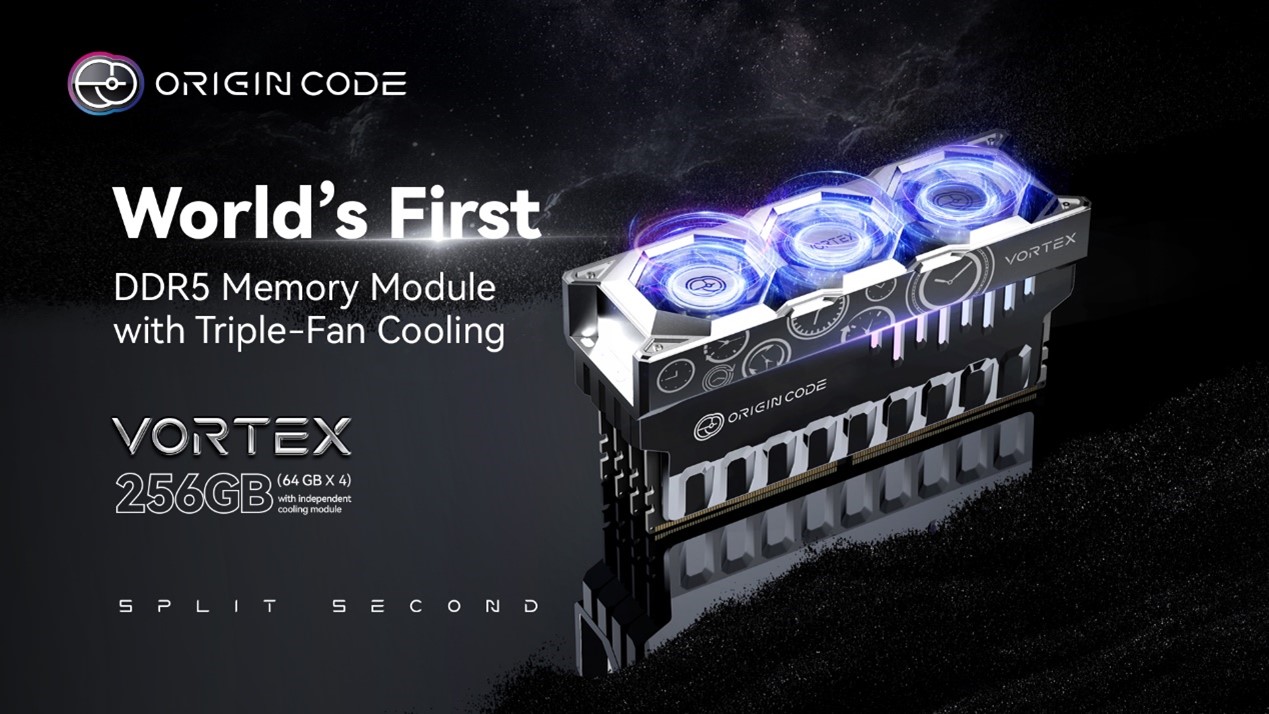
Origin Code has announced the VORTEX DDR5 as the world’s first DDR5 memory module to integrate an active triple-fan cooling system. While the claim itself is attention-grabbing, the underlying concept deserves closer examination. Rather than focusing solely on higher frequencies or tighter timings, this product addresses a long-standing limitation in modern systems: thermal constraints on memory performance.
Rethinking Memory Cooling
For years, system builders have invested heavily in cooling solutions for CPUs and GPUs, while memory modules have largely remained dependent on passive heatsinks. This approach has been sufficient in the past, but with DDR5 pushing higher data rates and capacities, thermal stability is becoming increasingly critical.
The VORTEX DDR5 introduces an active cooling system built around a triple 4020 fan module. These dual-ball bearing fans deliver approximately 22.5 CFM of airflow directly across the memory modules, improving heat dissipation while maintaining low noise levels and durability under continuous load.
This system is further enhanced by Origin Code’s ScaleCut Cooling Fin design, which increases surface area and optimizes airflow dynamics. The result is a reported improvement of up to 39.8 percent in heat dissipation efficiency. Such an approach reflects a more deliberate effort to treat memory as a thermally sensitive performance component rather than a passive element within the system.
Performance and Capacity
Beyond its cooling architecture, the VORTEX DDR5 offers a range of configurations that position it firmly in the high-performance segment. Available specifications include speeds up to 6200 MT per second with low latency timings, as well as configurations that support extended profiles reaching 8000 MT per second.
Equally notable is its support for high-capacity kits, scaling up to 256 GB. This aligns with the growing demands of modern computing workloads, particularly in areas such as artificial intelligence, large-scale simulations, and content creation, where both bandwidth and capacity are essential for sustained performance.
[caption id="attachment_70333" align="aligncenter" width="1024"]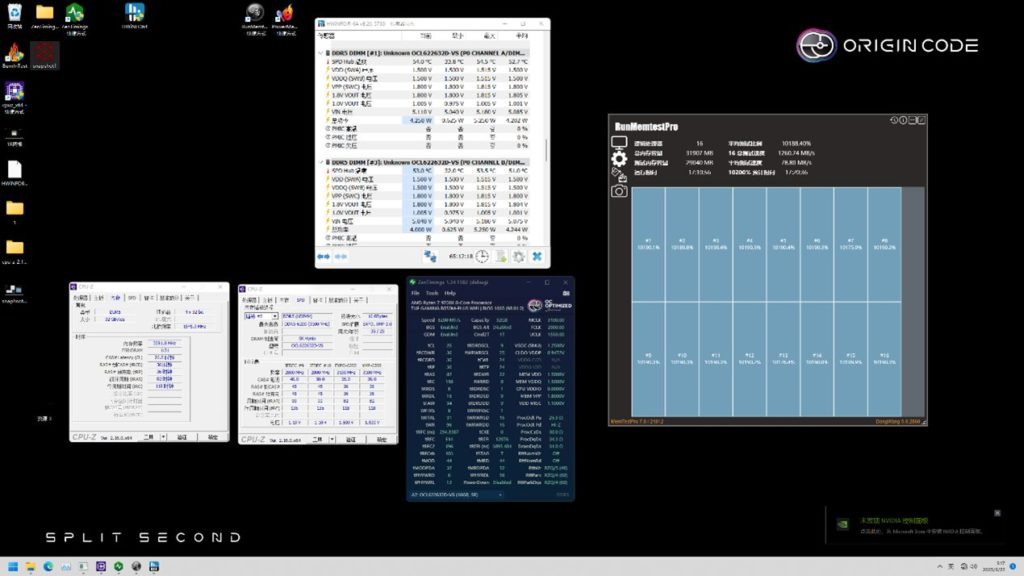 6200 MT/s CL26 32 GB (16 GB x 2)[/caption]
[caption id="attachment_70334" align="aligncenter" width="1024"]
6200 MT/s CL26 32 GB (16 GB x 2)[/caption]
[caption id="attachment_70334" align="aligncenter" width="1024"]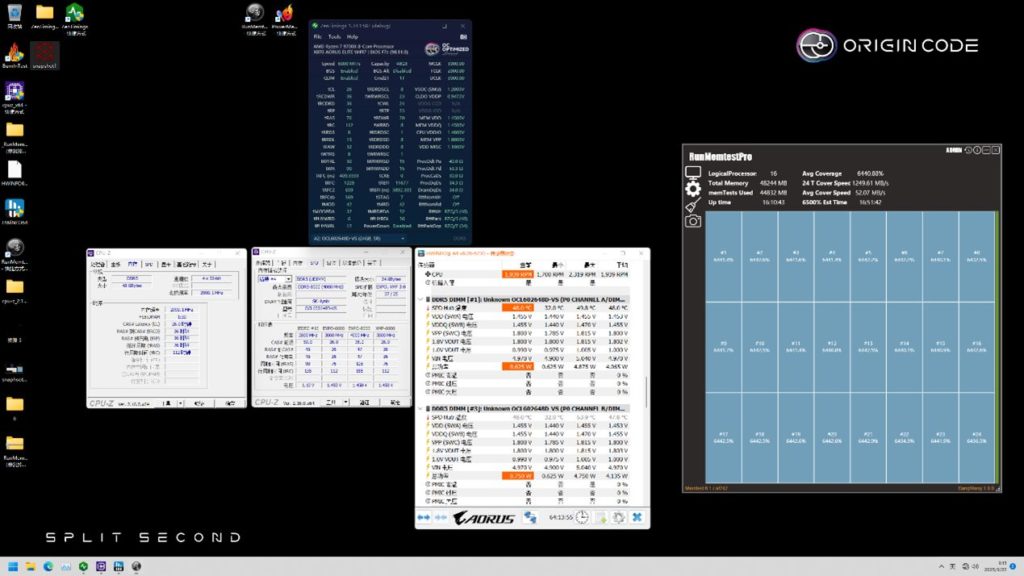 6000 MT/s CL26 (Dual EXPO Profiles, P2: 8000 MT/s CL36) 48 GB (24 GB x 2)[/caption]
[caption id="attachment_70335" align="aligncenter" width="1024"]
6000 MT/s CL26 (Dual EXPO Profiles, P2: 8000 MT/s CL36) 48 GB (24 GB x 2)[/caption]
[caption id="attachment_70335" align="aligncenter" width="1024"]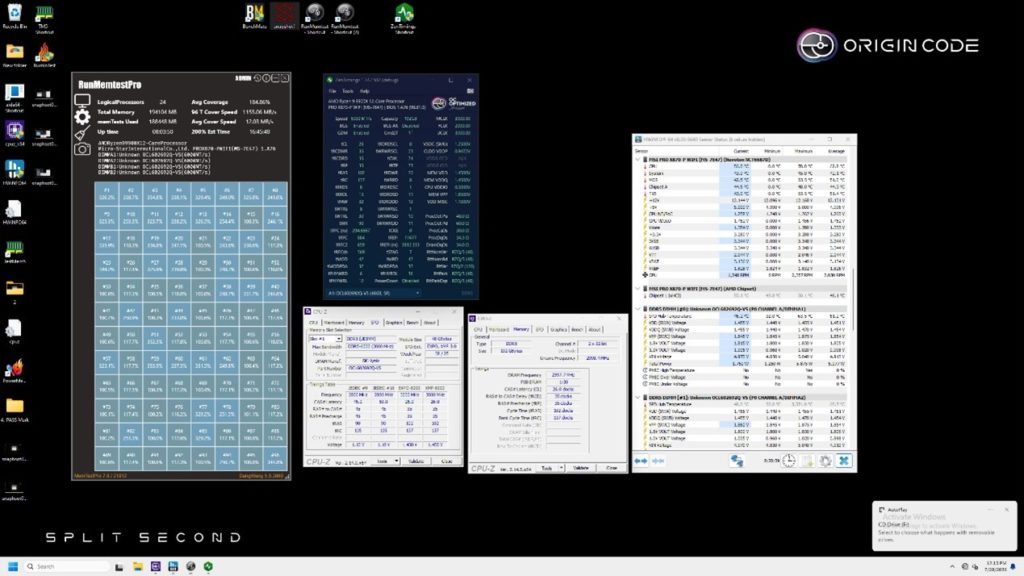 6000 MT/s CL26 192 GB (48 GB x 4)[/caption]
[caption id="attachment_70336" align="aligncenter" width="1024"]
6000 MT/s CL26 192 GB (48 GB x 4)[/caption]
[caption id="attachment_70336" align="aligncenter" width="1024"]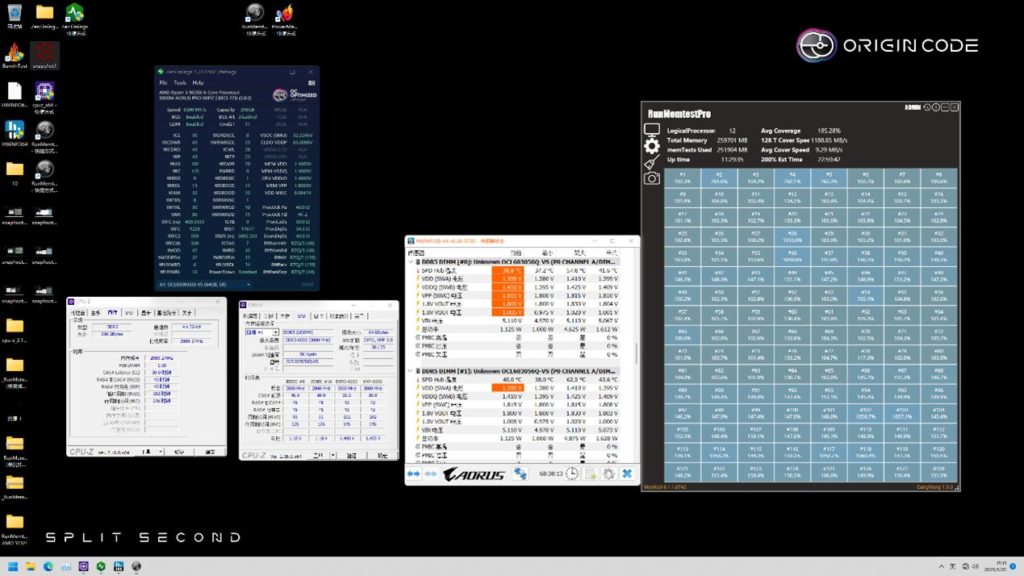 6000 MT/s CL30 256 GB (64 GB x 4)[/caption]
Engineering and Design Considerations
The VORTEX DDR5 is constructed using high-grade aluminum alloy, giving it both structural integrity and a refined appearance. The reflective, mirror-like finish complements high-end systems while reinforcing its positioning as a premium component.
From an engineering perspective, the integration of active cooling into a memory module introduces additional complexity, but also opens up new possibilities for performance tuning. By maintaining lower operating temperatures, the system can potentially achieve greater stability under overclocked conditions and prolonged workloads.
A Shift in Perspective
The introduction of a triple-fan cooling system on memory may initially appear excessive. However, when viewed in the context of evolving computing demands, the rationale becomes clearer. Modern systems are increasingly expected to handle continuous, resource-intensive tasks rather than short bursts of activity. Under such conditions, thermal management plays a critical role in maintaining consistent performance.
The VORTEX DDR5 reflects a broader shift in system design philosophy, where performance optimization is no longer isolated to processors and graphics units. Instead, it extends across the entire system, including components that were previously considered secondary.
Conclusion
The Origin Code VORTEX DDR5 represents more than a specification upgrade. It introduces a new way of approaching memory design by prioritizing thermal efficiency alongside performance. While it may initially appeal to enthusiasts, overclockers, and professional users, its underlying concept highlights a direction that the industry may gradually adopt.
As workloads continue to grow in complexity and intensity, innovations such as active memory cooling may move from being a niche feature to a practical necessity.