Tencent Smart Retail is pitching a scenario-led approach to enterprise AI, arguing that retailers should connect customer data, operational workflows and existing digital channels instead of treating artificial intelligence as a standalone technology project.
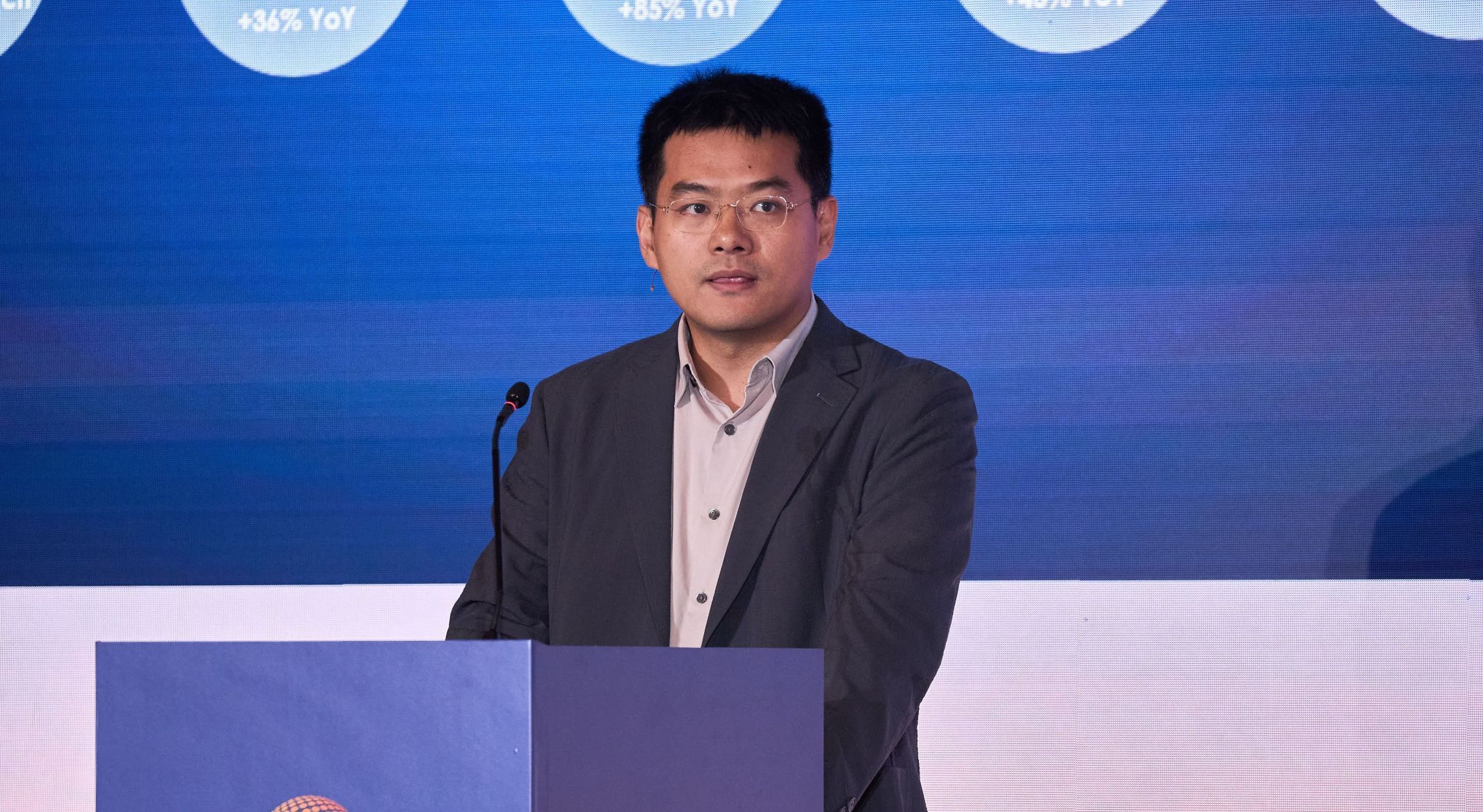
The Tencent Cloud business outlined the strategy at World Retail Lab Asia 2026 in Hong Kong, where it highlighted applications spanning product discovery, clienteling, design, software development and internal productivity. The presentation did not announce a new consumer product or provide independently audited performance data; it instead set out Tencent’s direction for deploying AI across retail operations.
AI moves closer to product discovery and customer engagement
Terry Li, Vertical General Manager of Tencent Smart Retail, said AI is moving towards the front of the shopping journey, influencing how consumers discover and evaluate products as well as how they interact with brands. For retailers, that creates pressure to make product information and customer engagement workflows more accessible to AI-powered services.
“The true value of AI lies not in the technology itself, but in how it is applied to real-world retail scenarios,” Li said. He described Tencent’s role as connecting customer insights, operational workflows and ecosystem capabilities so that retailers can expand AI use beyond isolated pilots.
That approach draws on Tencent’s existing platforms, including Weixin/WeChat, WeCom and Mini Programs. Tencent says combining those touchpoints with cloud services and AI can link employees, customers and business operations, although the practical gains will depend on each retailer’s data quality, integration work and deployment choices.
Tencent groups five AI tools around enterprise workflows
The portfolio presented at the event covered five named services:
- WorkBuddy, an AI productivity agent designed to plan and carry out tasks described in natural language;
- CodeBuddy, an AI coding assistant;
- DataBuddy, an AI-native data workspace;
- Miora, an AI-native creative and design platform; and
- Ardot, an AI-powered design-to-code platform.
Tencent positions the tools across workforce productivity, organisational knowledge, data analysis, creative work and software development. Its official WorkBuddy page, for example, describes an agent that can break down natural-language requests, plan steps, invoke tools and produce work outputs.
The company also pointed to intelligent manufacturing, AI-assisted clienteling and generative creative work as areas of growing retail adoption. These are vendor-stated use cases rather than findings from an independent market study, and Tencent did not provide comparable before-and-after metrics for the retailers named in the announcement.
SML Group describes AI use across several business functions
SML Group, which supplies retail identification, RFID and digital-product solutions, joined Tencent for a discussion about AI in product development and operations. Tencent says SML is embedding AI in market intelligence, customer engagement, product development and resource management, with expert knowledge incorporated into AI-assisted workflows.
Sinong Duan, SML Group’s Vice President of Strategy and Transformation, identified customer engagement as one area with significant potential. She said AI could help businesses understand customer needs and improve product recommendations, and added that SML’s teams had used Tencent WorkBuddy to explore adoption.
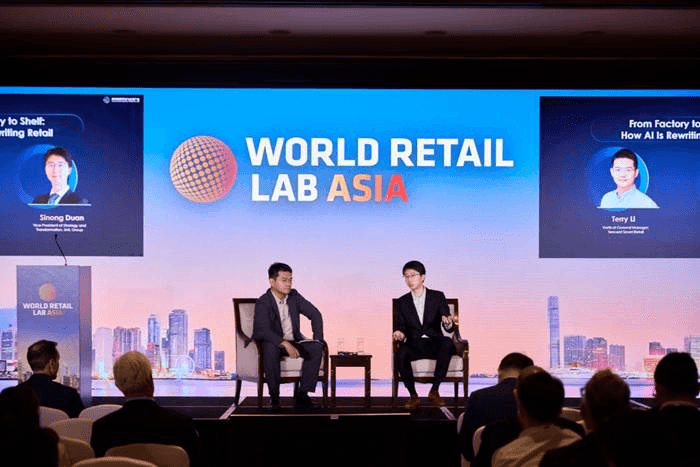
The announcement says SML’s use of AI has improved efficiency, response times and internal knowledge sharing, but it does not disclose quantified results or the methodology used to assess those outcomes. TTR has not independently verified the claimed improvements.
Chow Tai Fook applies AI to design and store operations
Tencent also cited Chow Tai Fook Jewellery Group as an example of AI being applied to jewellery design, customer operations and store operations. The stated goals include improving employee productivity, customer engagement and service consistency.
According to Tencent’s release, Chow Tai Fook serves nearly 60 million members globally and member purchases account for more than 95% of consumption. The jewellery group is also using a global customer-data platform and unified customer insights to understand preferences across markets. Those figures and outcomes are company-provided and were not independently audited for this article.
Other organisations named as users of Tencent Cloud’s AI, data or ecosystem capabilities include Decathlon China, Estée Lauder Group and POP MART. Tencent says Smart Retail has worked with more than 600 retailers across over 30 retail segments, covering local businesses, multinational brands in China and Chinese companies expanding overseas.
Integration remains the core of Tencent’s retail pitch
The common thread is integration rather than a single retail-specific AI model. Tencent wants its productivity, data, creative and development tools to sit alongside customer-facing channels and internal systems, allowing information and workflows to move between them.
That could make existing Tencent ecosystem deployments a natural starting point, particularly for retailers already using Weixin/WeChat, WeCom or Mini Programs. It also means implementation questions around governance, access controls, data residency, model accuracy and system interoperability remain important. Tencent’s announcement did not detail pricing, deployment timelines or market-by-market availability for the broader Smart Retail offering.
More information about Tencent’s enterprise cloud and AI portfolio is available from the Tencent Cloud website.
Source: Tencent Cloud media release dated 21 October 2026, supplied event photographs, and Tencent Cloud’s official WorkBuddy page. Product capabilities, customer figures and business outcomes are attributed to Tencent Cloud and SML Group; TTR has not independently tested the services or audited the reported results.