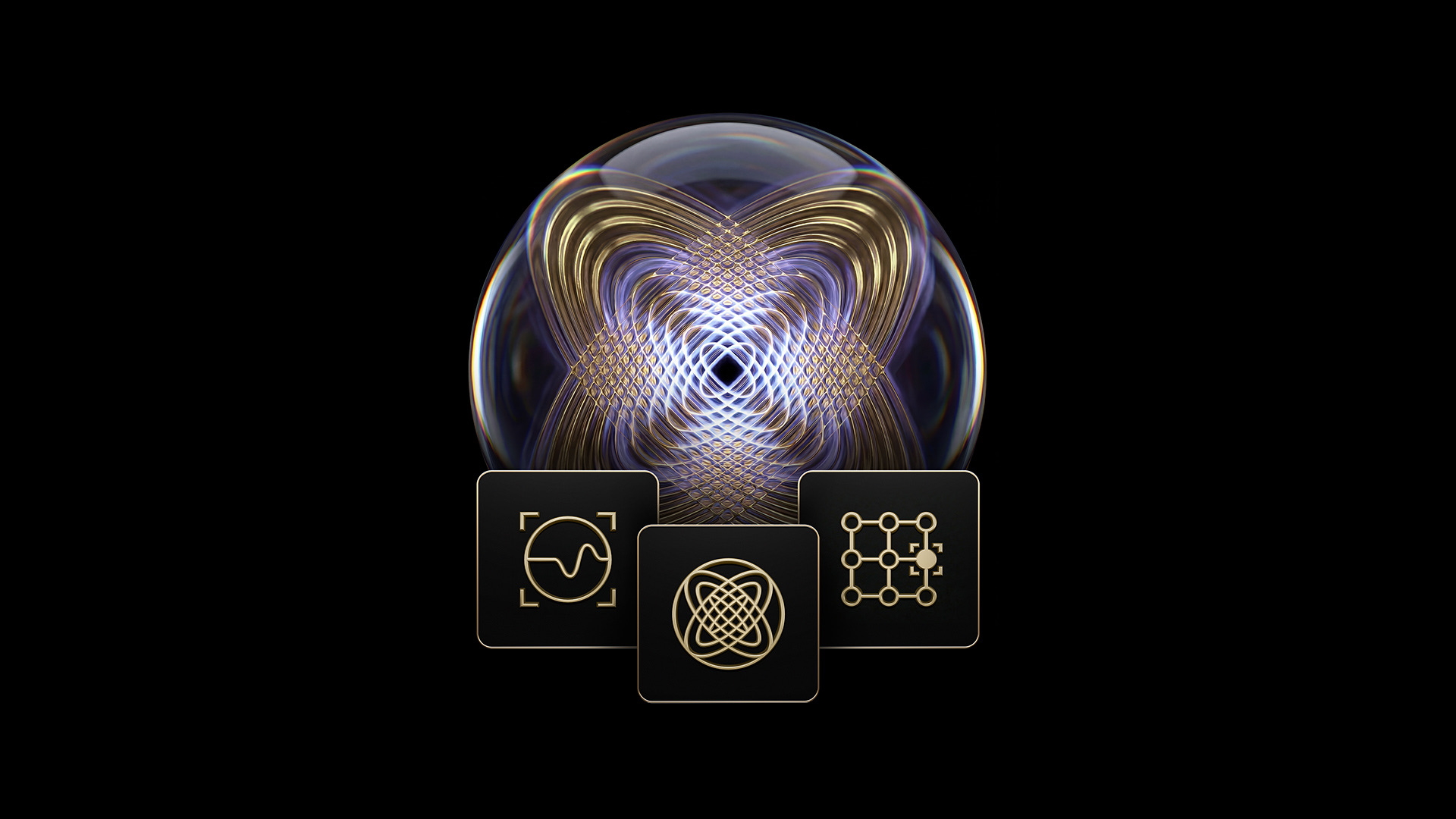
NVIDIA Ising: The World’s First Open AI Models to Scale Quantum Computing
NVIDIA has just made a massive leap toward making quantum computing a practical reality. At their recent special address, the team unveiled NVIDIA Ising, the world's first family of open-source quantum AI models designed specifically to tackle the two biggest headaches in the industry: processor calibration and error c
NVIDIA has just made a massive leap toward making quantum computing a practical reality. At their recent special address, the team unveiled NVIDIA Ising, the world's first family of open-source quantum AI models designed specifically to tackle the two biggest headaches in the industry: processor calibration and error correction.
Building a quantum computer is notoriously difficult because qubits are incredibly fragile. Even the slightest environmental change can throw off calculations. NVIDIA’s solution? Use AI as the "control plane" to turn these fragile systems into reliable machines.
Here is a breakdown of what makes the Ising family a game-changer for researchers and developers.
The Two Pillars of Ising
NVIDIA isn't just releasing one model; they are providing a full suite of tools targeted at specific engineering bottlenecks:
Ising Calibration (Vision Language Model): Traditionally, calibrating a quantum processor is a manual, tedious process that can take days. This VLM can interpret measurements from quantum processors in real-time, allowing AI agents to automate the process. This effectively shrinks the calibration window from days down to mere hours.
Ising Decoding (3D CNN): Error correction is the "holy grail" of quantum computing. NVIDIA has released two variants of a 3D Convolutional Neural Network—one optimized for speed and the other for accuracy. Compared to the current industry standard, pyMatching, Ising Decoding is up to 2.5x faster and 3x more accurate.
Open Source and Ecosystem Ready
By releasing these models under an Apache-2.0 license, NVIDIA is giving developers total control over their data and infrastructure. This is a significant move for academic institutions and enterprises—like Harvard, Fermi Lab, and IonQ—who are already among the first to adopt the technology.
The Ising family isn't just a standalone project; it integrates directly with the NVIDIA CUDA-Q software platform and the NVQLink hardware interconnect. This creates a full-stack environment where GPUs and Quantum Processing Units (QPUs) can communicate with minimal latency.
Implementation & Repositories
The central hub for the entire project is the NVIDIA Ising GitHub Repository. This serves as the landing page for the various tools, cookbooks, and framework integrations.
Ising Calibration (VLM): This is a 35B parameter Mixture-of-Experts (MoE) model. It’s built on the Qwen3.5-35B-A3B architecture and is specifically fine-tuned for analyzing quantum calibration plots.
Ising Decoding (3D CNN): These are lightweight, high-performance decoders. The SurfaceCode-1-Fast model has roughly 912K parameters, while the Accurate variant comes in at 1.79M parameters. They are designed to run with ultra-low latency on classical hardware while correcting quantum errors in real-time.
Development Requirements
To get these running, you’ll want to look at the following tech stack:
Serving Engine: The calibration model is optimized for vLLM with FlashAttention support.
Precision: Use BF16 serving precision to maintain accuracy while maximizing throughput.
Frameworks: Integration with NVIDIA CUDA-Q and cuQuantum is standard, allowing the models to interface directly with quantum simulation or hardware.
Recommended Hardware for Local Deployment
To run the Ising Calibration VLM effectively (especially with its 262k token context length), you’ll need significant VRAM. While these models are available via NVIDIA NIM APIs, running them locally for research requires professional-grade hardware.
The NVIDIA L40S is the ideal choice for data center or cloud-based inference due to its 48GB of GDDR6 memory and high Tensor core performance. For workstation-side development, the NVIDIA RTX 6000 Ada or the RTX 5000 Ada provide the necessary memory overhead to handle complex calibration vision tasks without bottlenecking.
Final Thoughts
As Jensen Huang put it, AI is becoming the "operating system" of quantum machines. By moving these critical tasks from human experts to high-performance AI models, NVIDIA is significantly lowering the barrier to entry for the next generation of supercomputing.
The models, training data, and workflows are available now on GitHub, Hugging Face, and build.nvidia.com. If you are a developer looking to experiment with hybrid quantum-classical systems, the barrier to entry just got a whole lot lower.
Google is adding shopping-focused responses to Gemini in Singapore, including product listings, review summaries, comparison tables, pricing and stock checks.
ASUS is positioning Agent Computer systems around local, hybrid and cloud AI, with ROG NUC and Ascent GX10 hardware supporting private, always-on agent workflows.
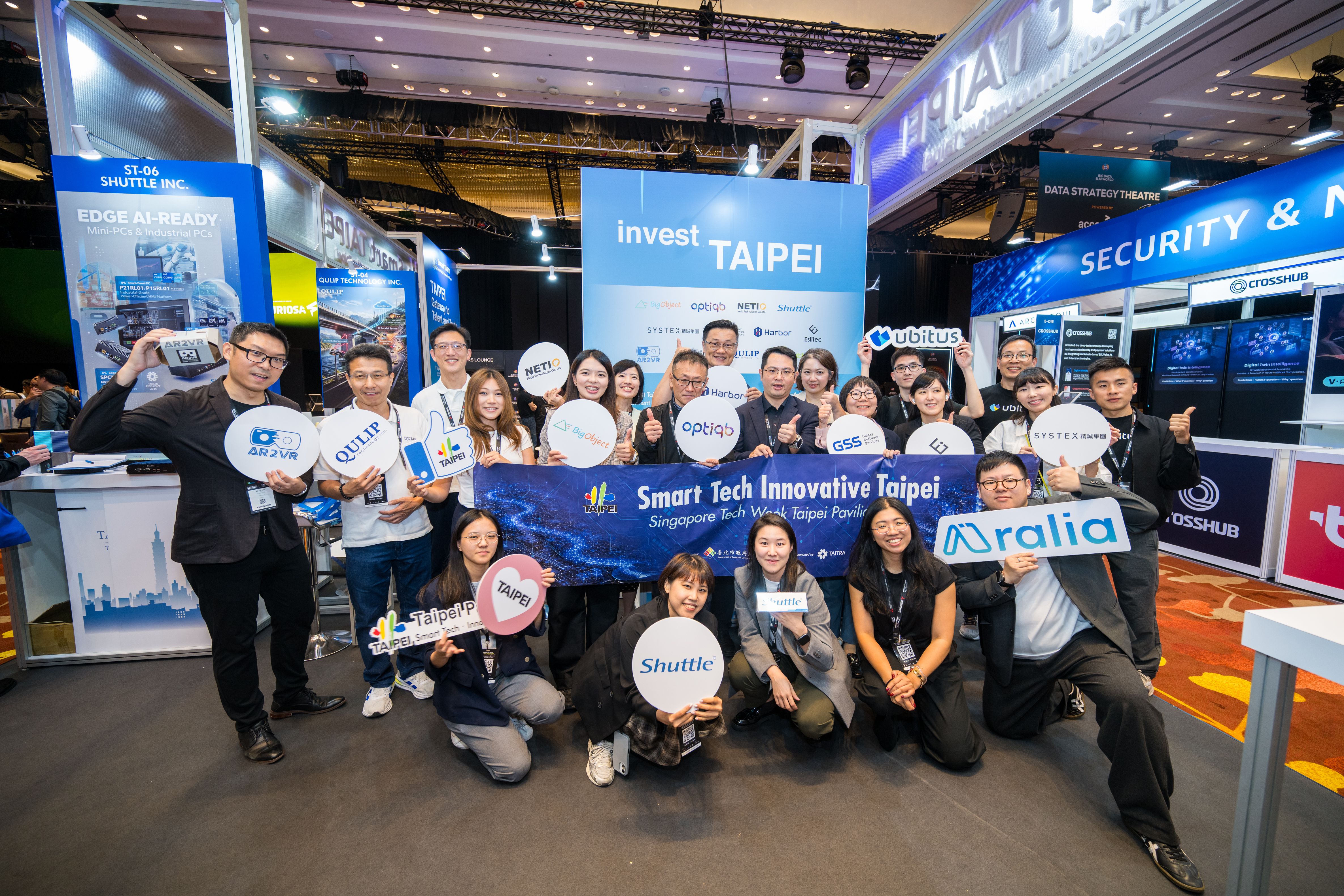
A new MOU between Taiwan and Singapore AI associations targets advisory work, market intelligence, enterprise exchange and SME expansion after Tech Week Singapore 2026.