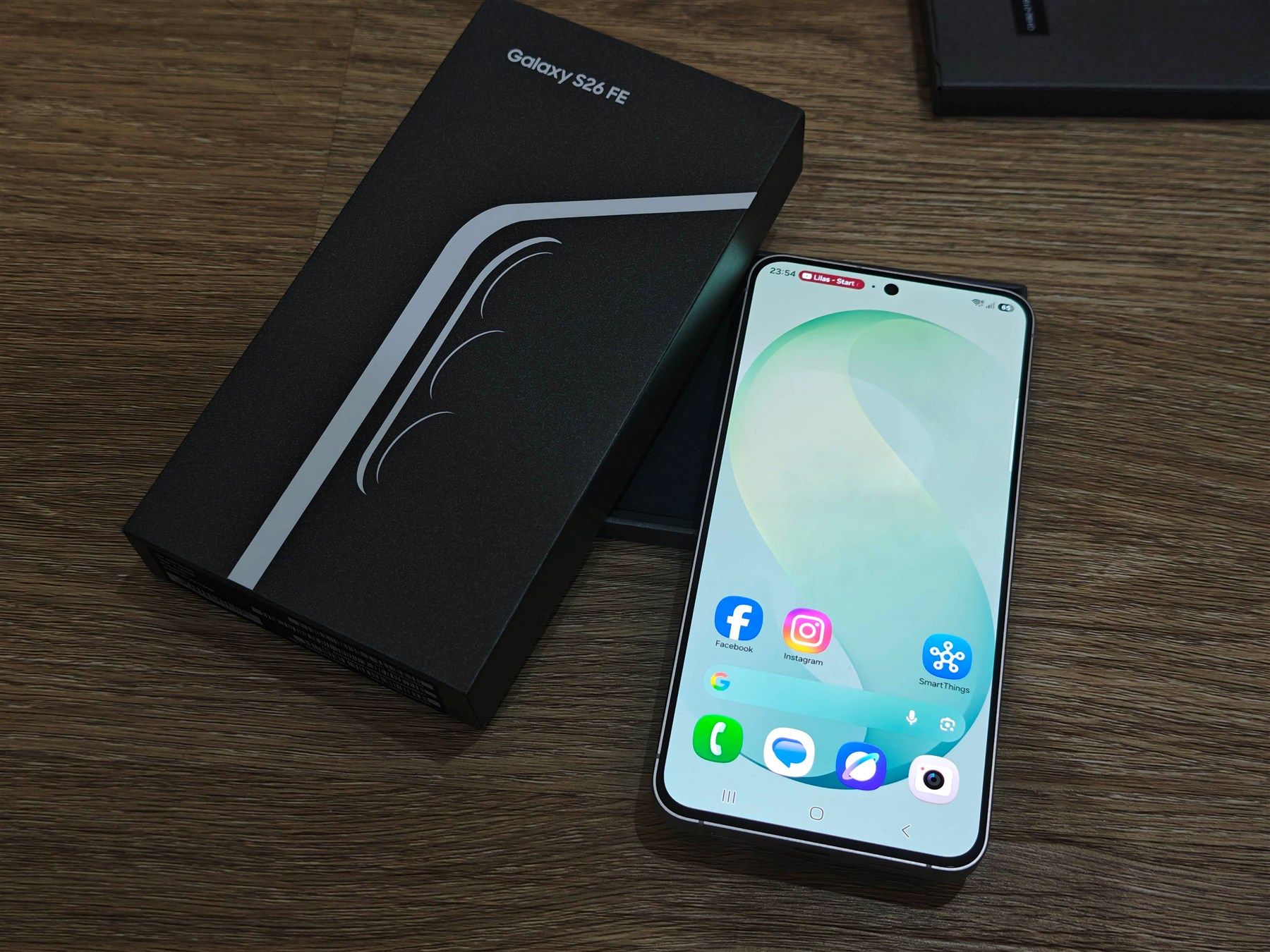
The Samsung Galaxy S26 FE is an easy phone to like. Its minimalist design suits my taste, it feels comfortable in my hand, and the smooth display and full stereo sound make it enjoyable to use. These are the things I notice whenever I pick it up, long after the specification sheet has lost its novelty.
There are frustrations, too. The fingerprint reader hesitates more often than I would like, the camera bump makes a case feel necessary, and the phone gets noticeably hot after demanding benchmarks. Samsung has preserved plenty of appeal here, but some compromises affect the experience more than others.
To see whether the FE makes sense, I have used the Galaxy S26 Plus as a reference within Samsung’s range and my own Xiaomi 15 for comparisons of handling, sound, unlocking and photography. The camera samples cover indoor food and figurines, daytime airport scenes and an aircraft on the apron at night.
What Fan Edition means
FE stands for “Fan Edition”. Samsung describes the range as a way to bring together popular Galaxy features at a more accessible price. In practice, that means choosing which parts of the flagship experience to preserve and where to make savings. With the S26 FE, the question is whether the features you enjoy outweigh the compromises you encounter every day. Samsung’s explanation of FE
Galaxy S26 FE and Galaxy S26 Plus
The S26 Plus is a useful comparison because both phones have a 6.7-inch display, a 4,900mAh battery and support for 45W wired charging. The Plus steps up the display resolution, processor and memory, and uses a different fingerprint technology.
| Feature | Galaxy S26 FE | Galaxy S26 Plus |
|---|---|---|
| Display | 6.7-inch FHD+ Dynamic AMOLED 2X, up to 120Hz | 6.7-inch QHD+ Dynamic AMOLED 2X, up to 120Hz |
| Processor in Singapore | Exynos 2500 | Exynos 2600 |
| RAM | 8GB | 12GB |
| Rear cameras | 50MP main, 12MP ultrawide, 8MP 3x telephoto | 50MP main, 12MP ultrawide, 10MP 3x telephoto |
| Battery | 4,900mAh | 4,900mAh |
| Wired charging | Up to 45W | Up to 45W |
| Wireless charging | Up to 15W | Up to 20W |
| Fingerprint reader | Optical beneath the display | Ultrasonic beneath the display |
| Weight | 193g | 190g |
| Singapore launch RRP, 256GB | S$1,168 | S$1,628 |
Hardware specifications: Galaxy S26 FE, Galaxy S26 Plus in Singapore and Samsung’s model comparison.
At their Singapore launch RRPs, the 256GB FE costs S$460 less than the 256GB Plus, with GST included. That is a meaningful saving, though promotions can change the gap. Compare the same storage capacity and the actual checkout prices when deciding whether the Plus’s sharper screen, newer chip and additional RAM are worth paying for. FE launch pricing, S26 Plus launch pricing
Design and everyday handling
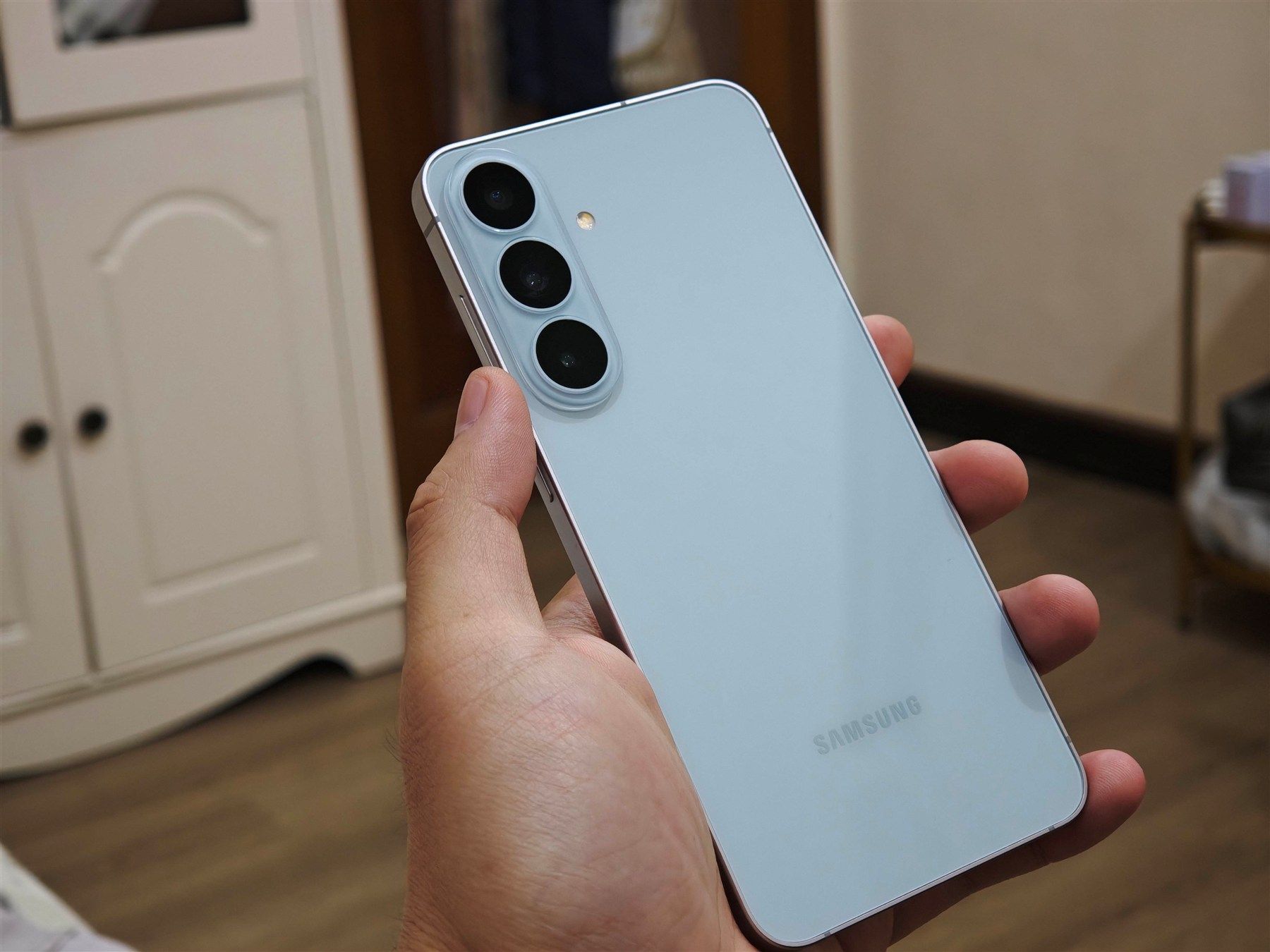
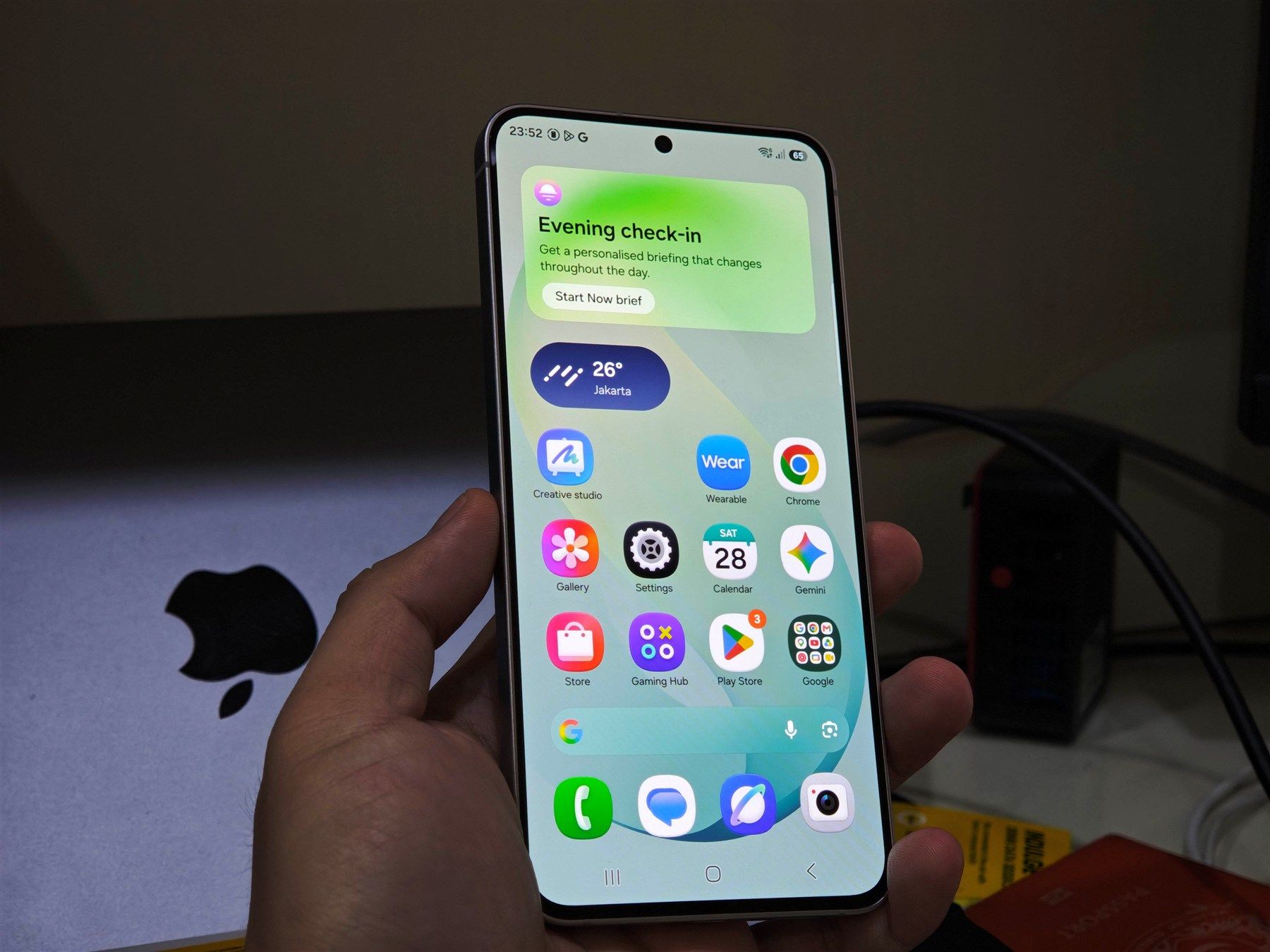
Some people may find the S26 FE too simple, or even boring. I like its restrained styling. A phone does not need an elaborate rear design to look good, and the FE’s minimalist appearance is something I appreciate each time I use it.
It also feels good in my hand. Despite the large display, it is manageable and does not feel bulky in my pocket. At 193g, it is slightly heavier than the 190g S26 Plus, but the way it carries its size makes it feel reasonably light to me.
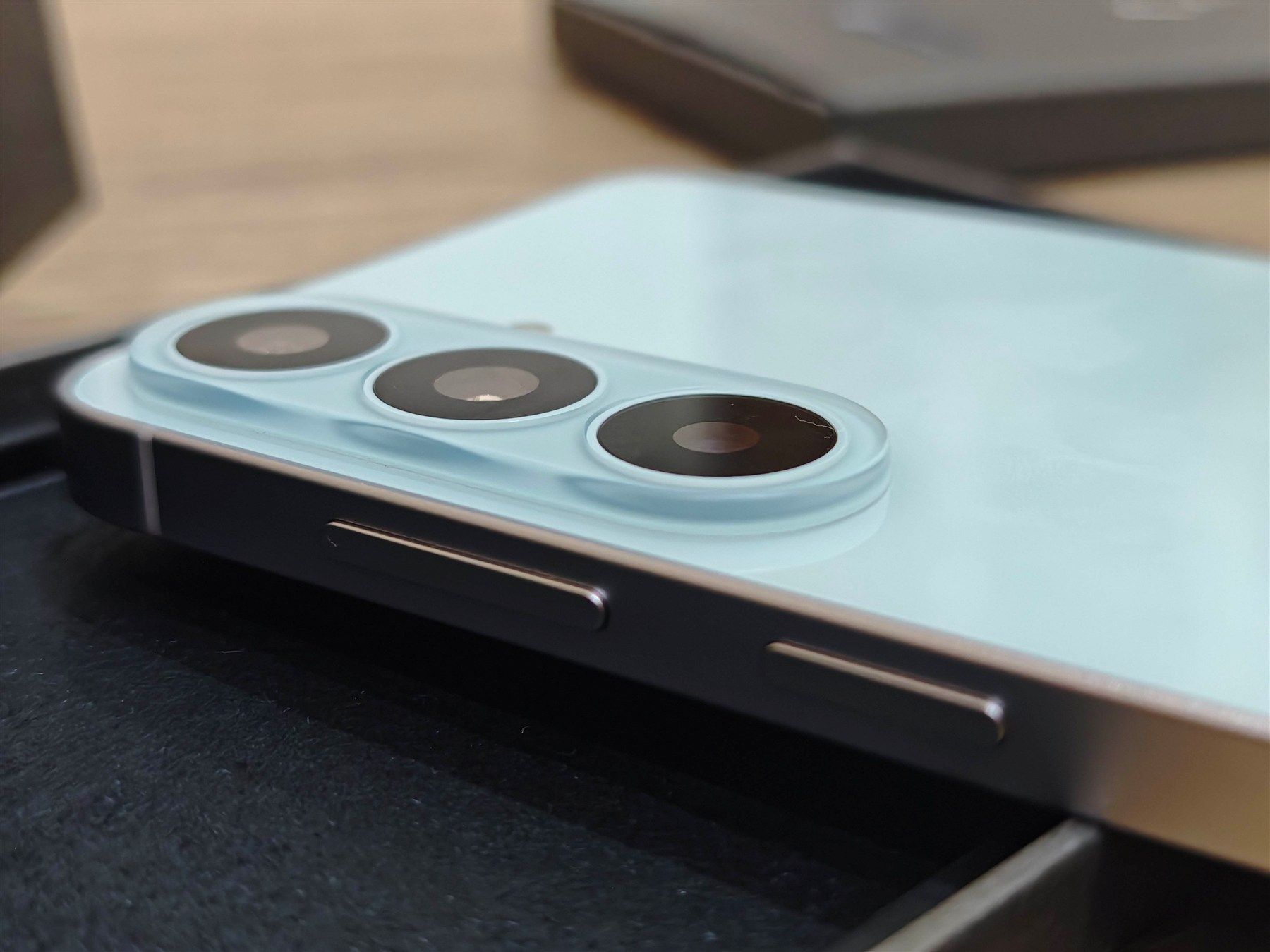
The camera protrusion is my least favourite part of the design. It stands out against the slim body and makes me want a protective case. Large camera bumps are common on modern phones, so Samsung is hardly alone here, but I would still prefer a less pronounced one.
Display and speakers
The display is one of my favourite parts of the FE. The 6.7-inch Dynamic AMOLED 2X panel runs at up to 120Hz, making scrolling and interface animations look fluid. That smoothness helps ordinary interactions feel responsive, and the screen is a pleasure to use. Samsung’s display specifications
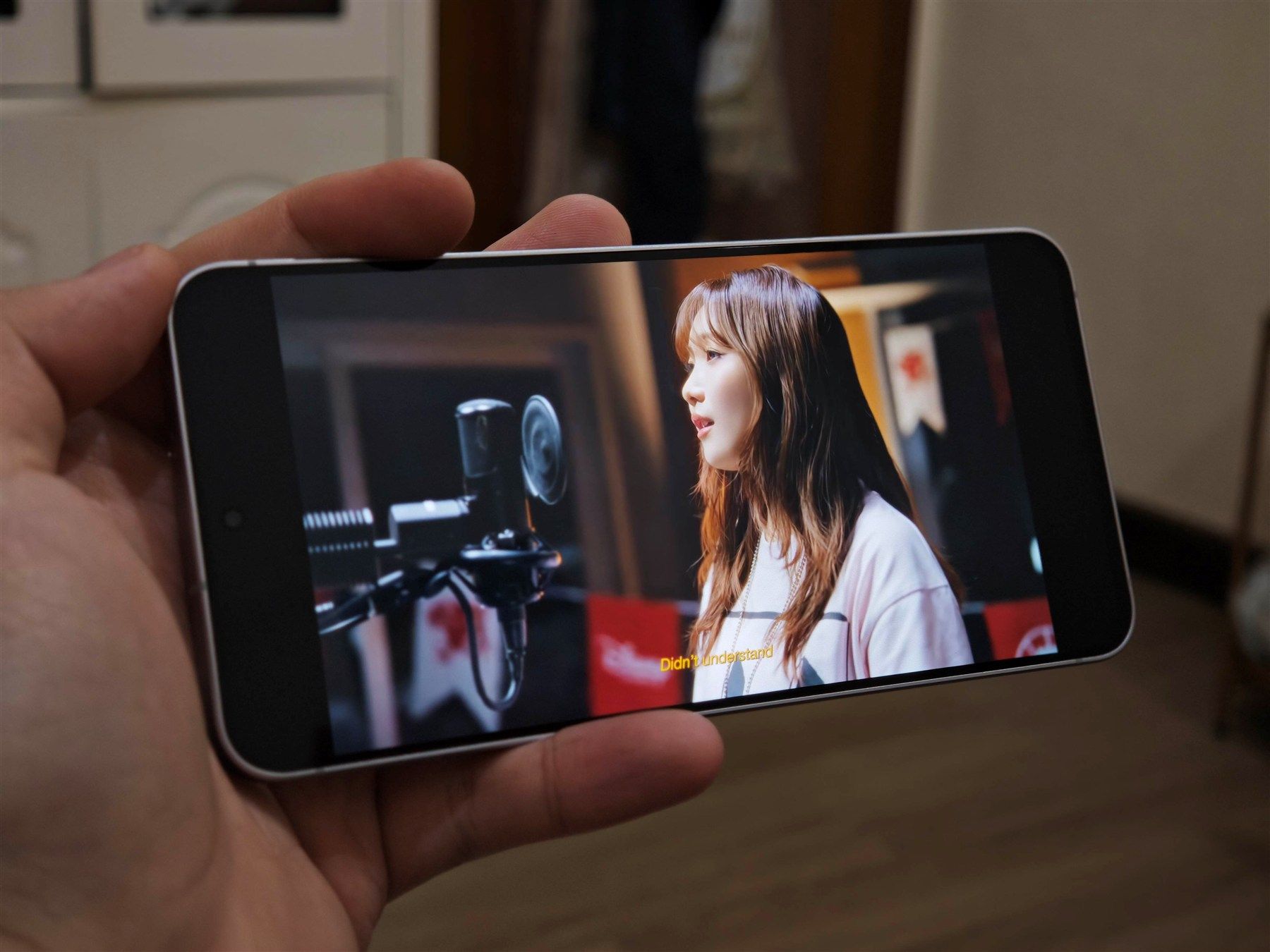
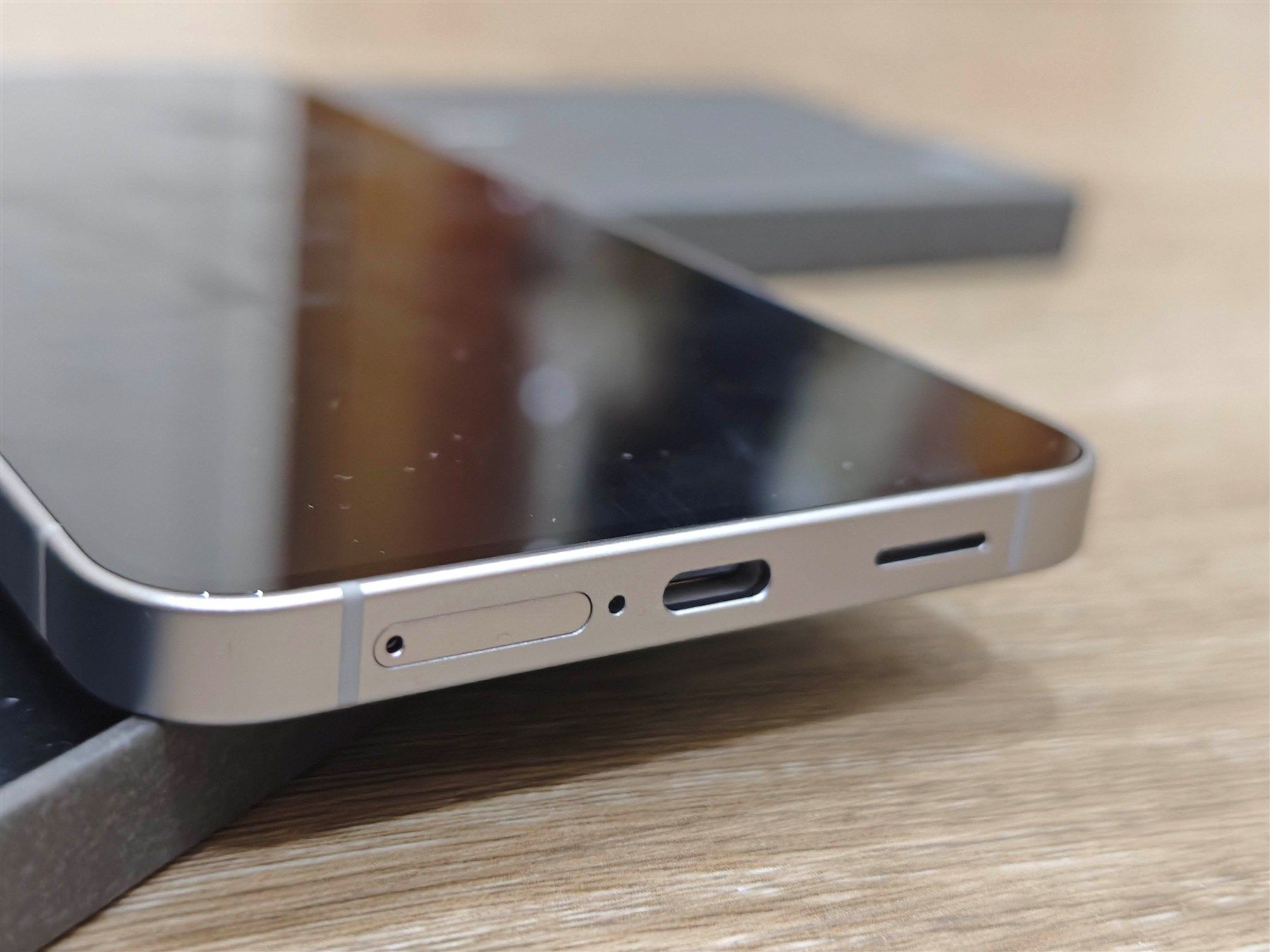
I also prefer the weight and depth of its stereo sound to the presentation of my Xiaomi 15. The Samsung sounds fuller and more impactful, which makes listening enjoyable. Its stereo support is listed in Samsung’s audio specifications.
Busy music exposes its weakness. When several instruments play together, the sound becomes congested and individual parts are harder to follow. Xiaomi does a better job of separating instruments and voices to my ears, with vocals sitting more prominently in the mix. I enjoy Samsung’s fuller sound, but Xiaomi makes complex tracks easier to untangle.
Fingerprint recognition
The fingerprint reader is a more persistent annoyance. I use it throughout the day to unlock the phone and authenticate in apps, and the FE feels less responsive and dependable than my Xiaomi 15. Moving between the two phones makes that hesitation especially noticeable.
Samsung uses an optical reader in the FE, while the S26 Plus uses an ultrasonic sensor, as does the Xiaomi 15. Sensor type alone does not explain every difference in recognition, but the result on this FE is frustrating. This is an interaction I repeat often enough that I would have liked Samsung to give it more attention.
Screen protector choice also matters. Samsung warns that unsuitable or poorly fitted protectors can reduce recognition or stop fingerprints being recognised. I have not reproduced that issue on this unit; it is separate from my observations about its responsiveness. Samsung’s screen protector guidance
Camera comparison with Xiaomi 15
I photographed similar scenes with both phones, with Samsung on the left and Xiaomi on the right in each paired image. Viewpoints, exposure and moving subjects differ, so these are comparisons of the photographs I obtained rather than controlled camera measurements. Focal lengths quoted below are 35mm equivalents from the files, and zoom labels are approximate.
Indoor food and small objects
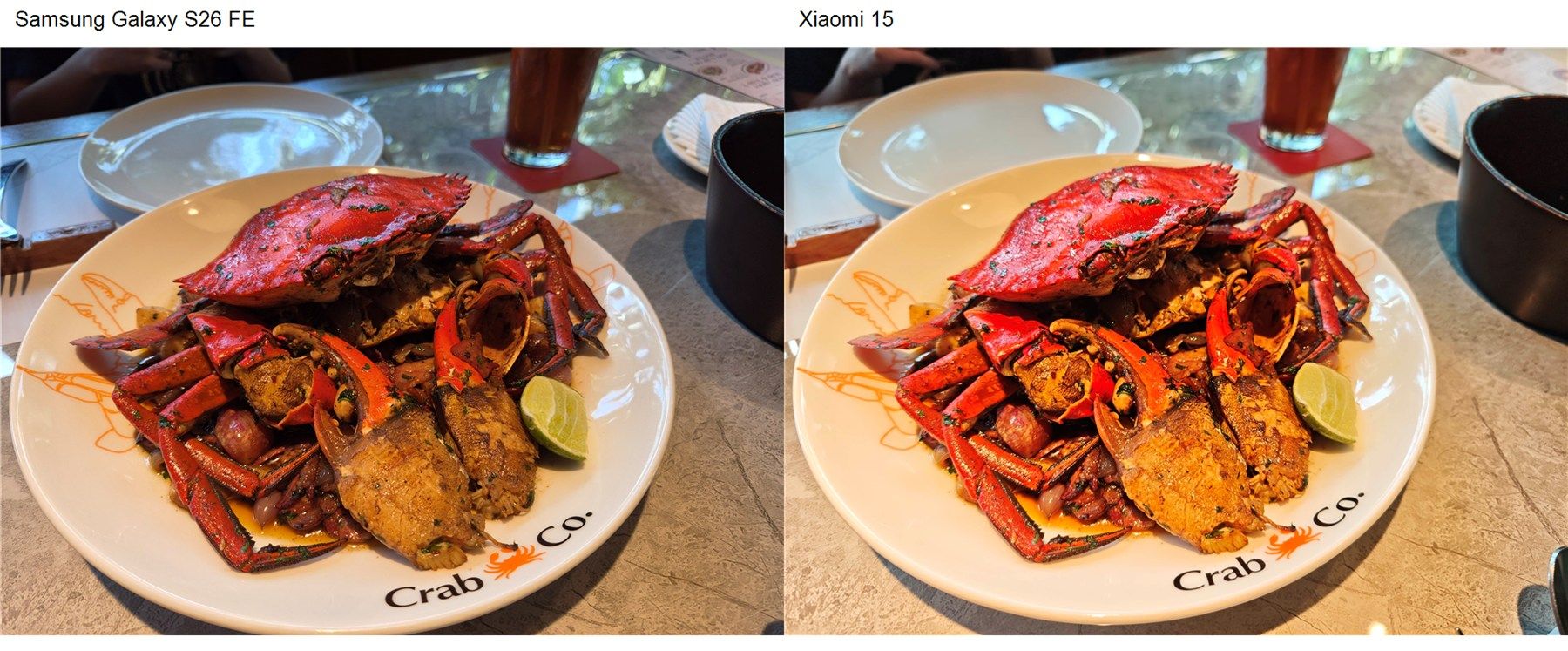
The crab platter shows two quite different approaches. Xiaomi produces a brighter, punchier photograph, with stronger reds and a warmer-looking plate. Samsung’s more restrained rendering makes subtle texture in the brighter parts of the shell easier to distinguish. I slightly prefer Samsung here, although Xiaomi’s bold colours make the food look immediately appetising.
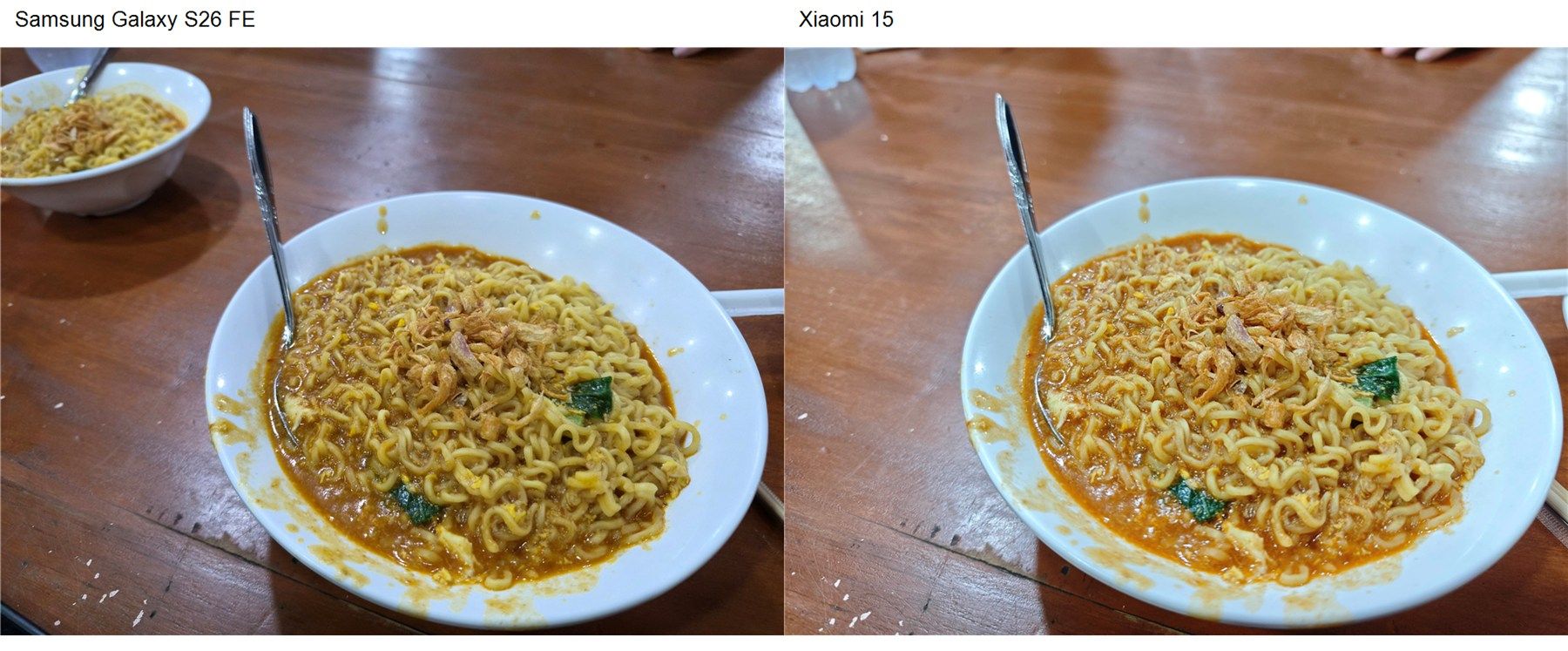
The noodles with sauce shift the balance towards Xiaomi. Its brighter image gives the fried toppings more apparent definition and makes the dish stand out. Samsung’s photograph is usable, but its subdued presentation is less appealing for a quick food photograph to share.
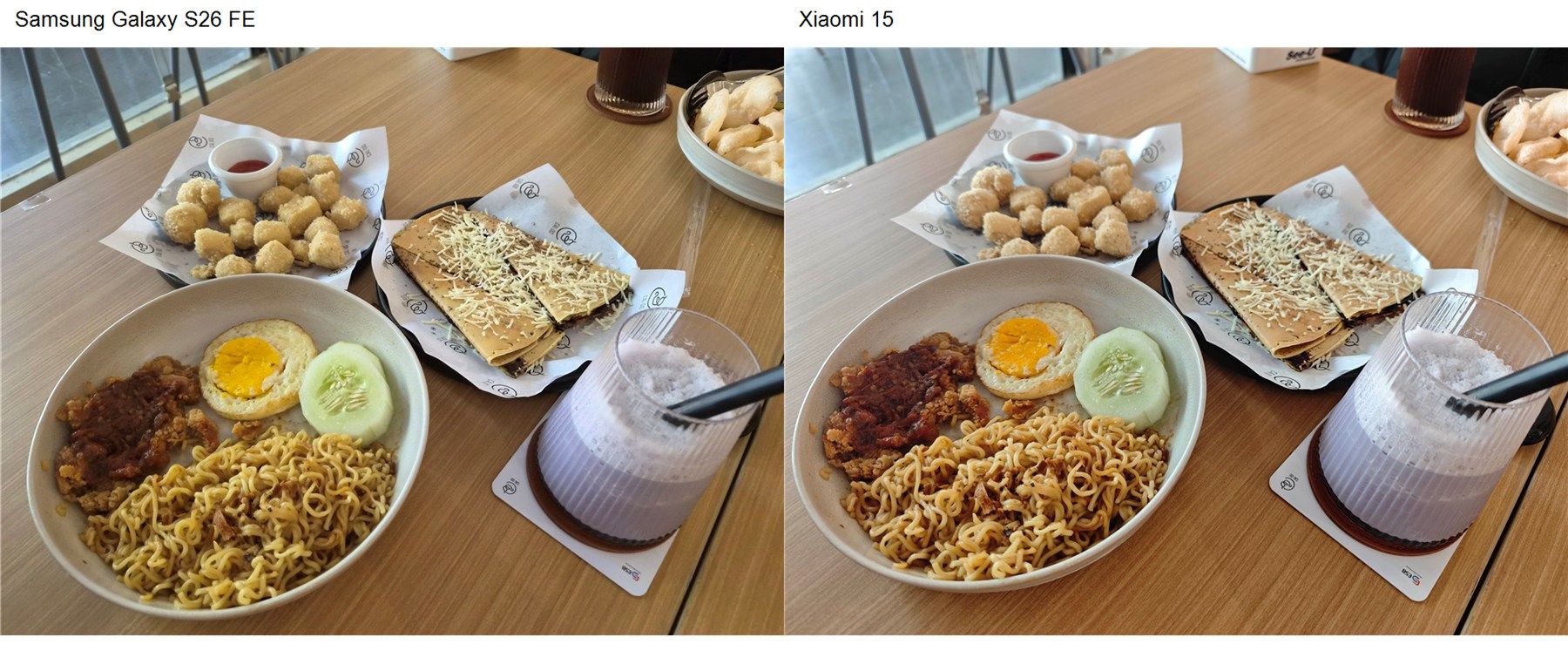
The wider table shot is more evenly balanced. Xiaomi gives the noodles and fried food in the foreground stronger definition and contrast. Samsung keeps the cheese-covered toast farther back noticeably clearer, with better separation between individual cheese strands. Which photograph works better depends on where you look.
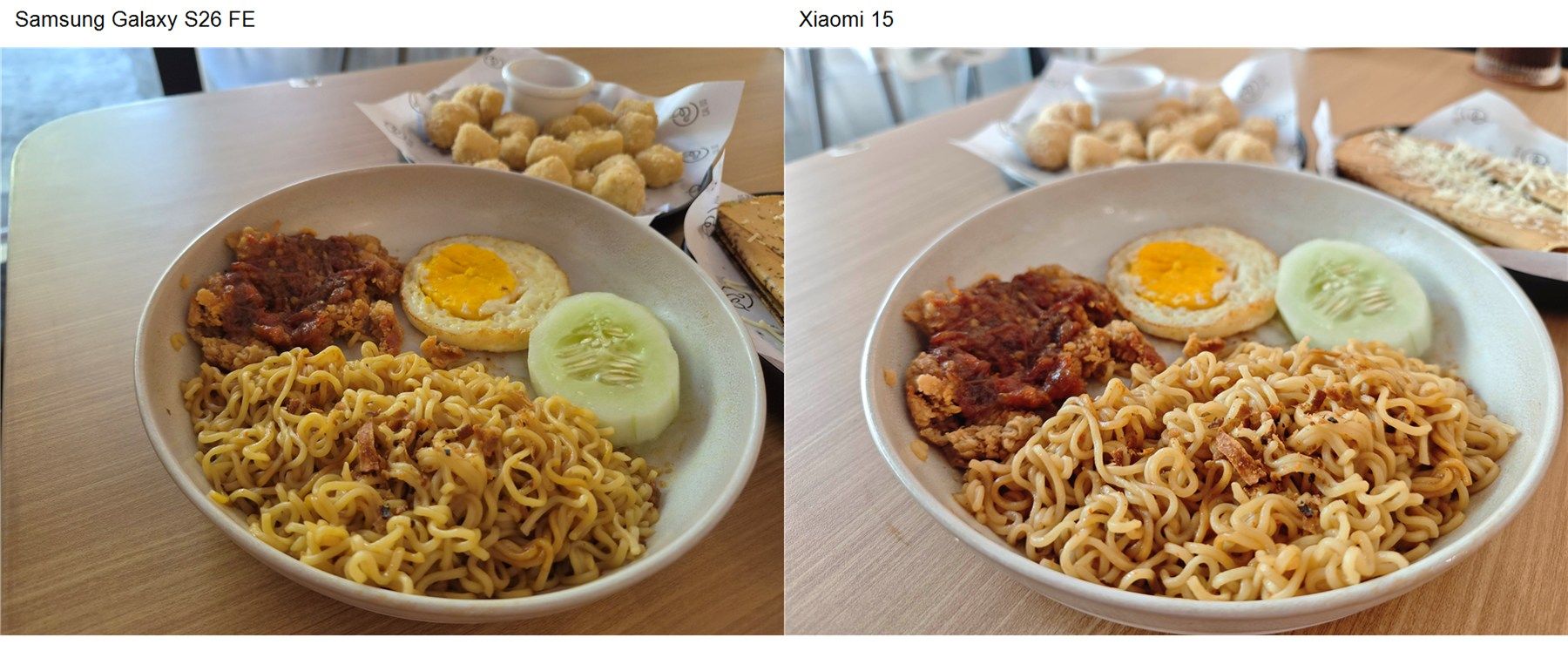
In the closer noodle photographs, Xiaomi emphasises the food at the front while the egg, cucumber and background snacks become progressively softer. Samsung keeps more of the meal recognisable. The different shooting distances and framing affect this result, so I see it as a difference in how the photographs draw attention rather than a precise sharpness ranking.
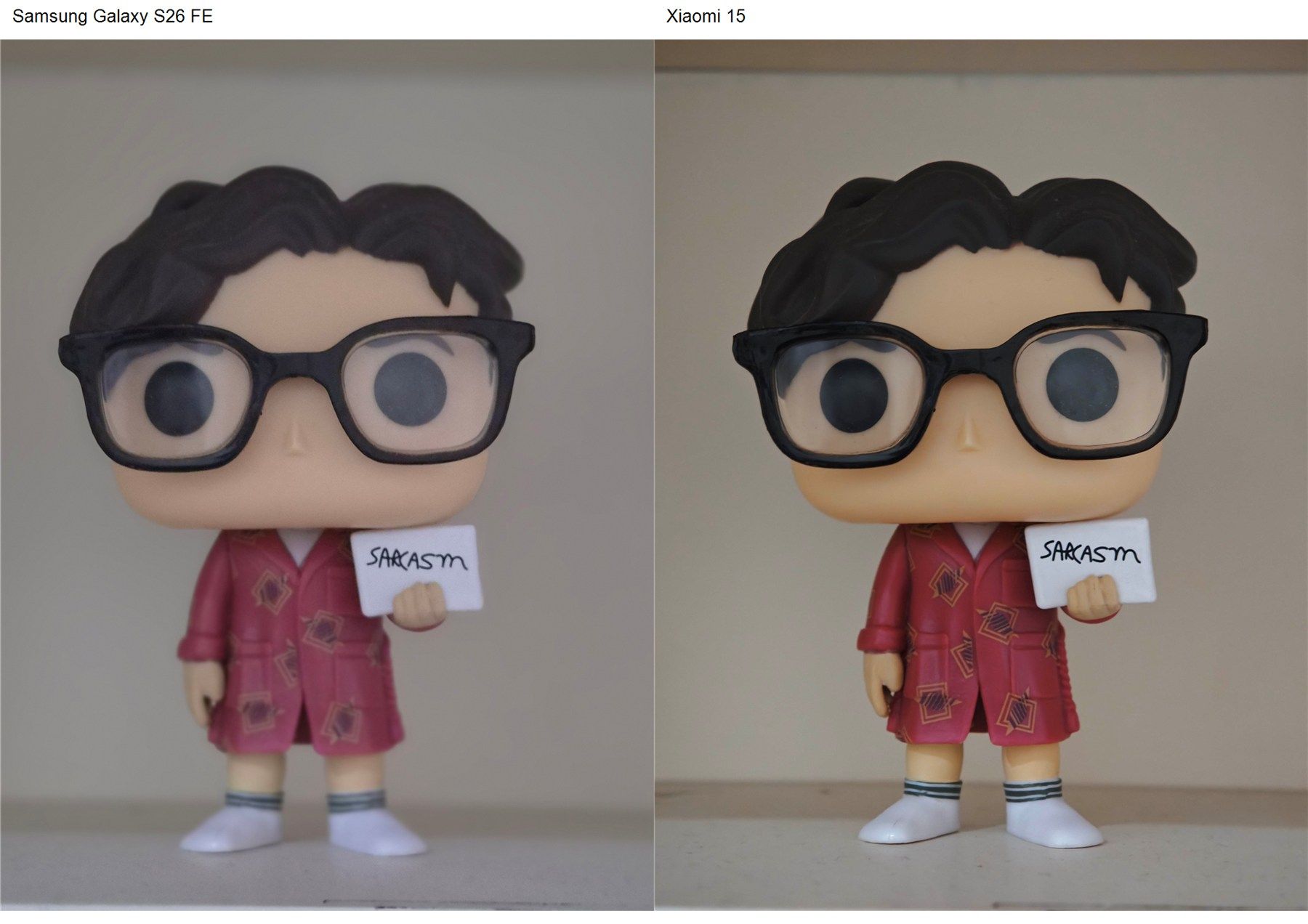
The single figurine produces the biggest indoor gap. Xiaomi captures clearer lettering, more distinct clothing patterns and better-defined glasses. Samsung looks softer and grainier. Both files report roughly 60mm-equivalent framing, but Samsung used its main camera and Xiaomi its telephoto. This shows what I obtained at similar framing, rather than how the two dedicated telephoto lenses compare.
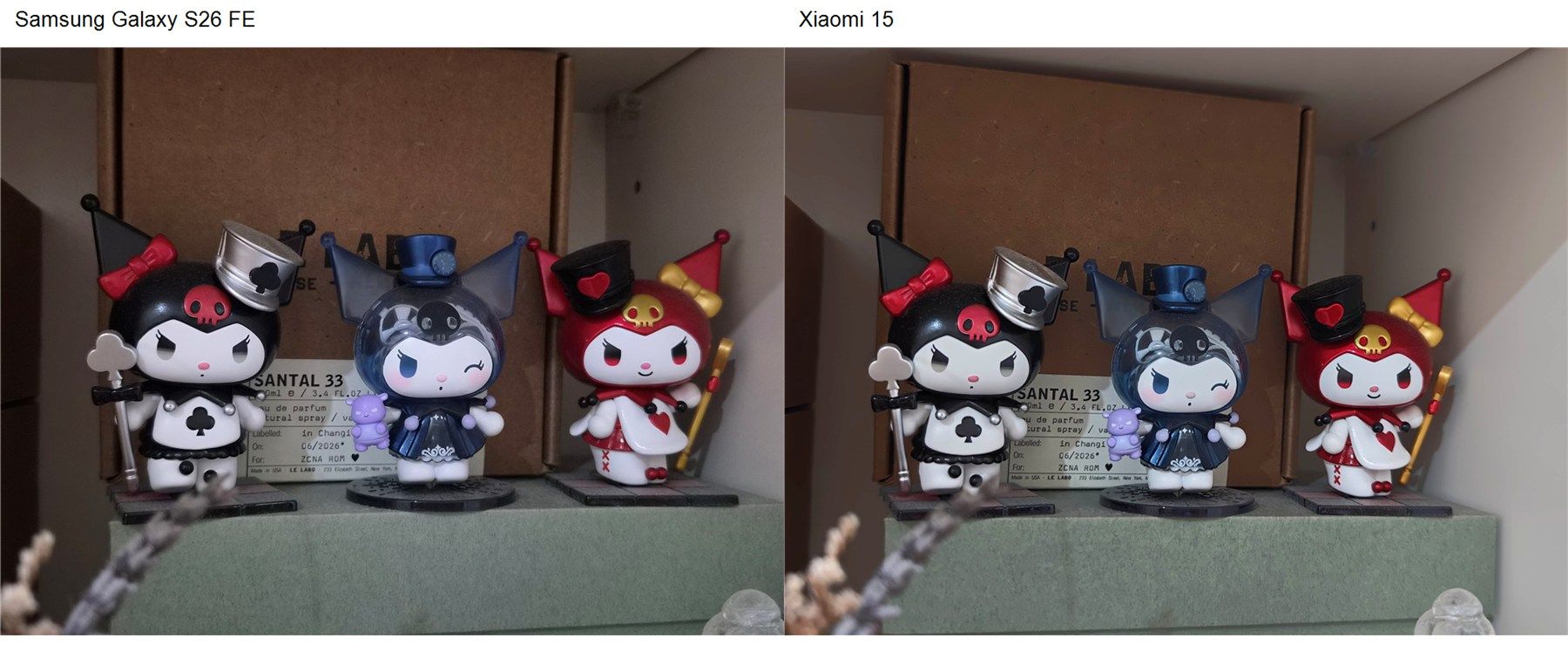
The group photograph is closer. Both capture the expressions and accessories clearly, although Xiaomi retains a slight edge in small lettering and decorative outlines. Samsung shows more grain on some darker surfaces. Overall, I lean towards Xiaomi for indoor subject definition, while Samsung’s gentler rendering sometimes preserves texture I prefer.
Daylight detail and contrast
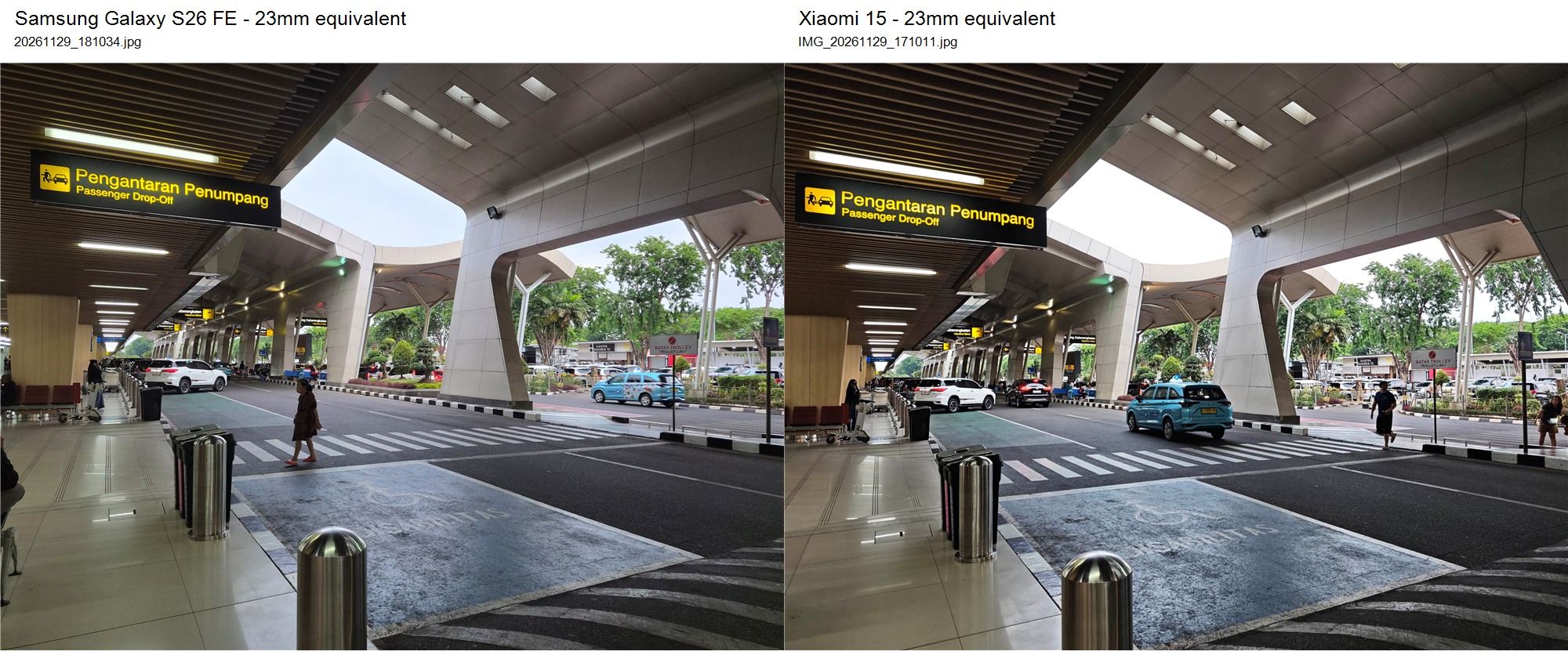
The airport drop-off places a bright sky above a shaded foreground. Samsung retains more pale blue in the opening between the roofs, where Xiaomi’s result is much closer to white. The FE also lifts the covered foreground, making the roof structure easy to see.
Xiaomi gives the shadows and road markings more punch, but I prefer Samsung’s balance in this pair. The sky keeps some colour without leaving the foreground too dark. In these sheltered daytime scenes, the FE is a stronger competitor than the indoor figurine photographs suggest.
Ultrawide
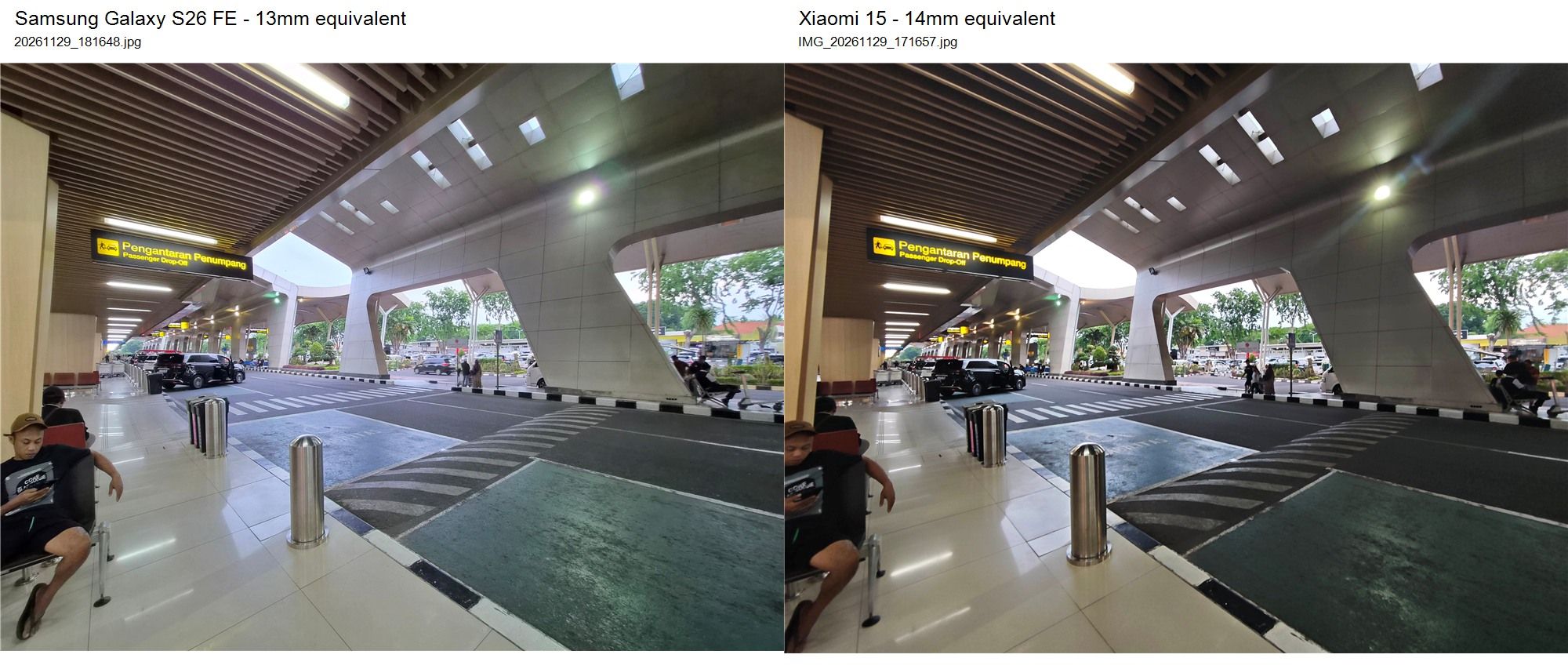
Samsung’s ultrawide reports 13mm-equivalent framing against Xiaomi’s 14mm, giving it a slightly wider view. It also produces the brighter image under the canopy, making the ceiling, floor and waiting area easier to inspect. Xiaomi favours deeper shadows and stronger contrast.
The FE’s ultrawide is useful for architecture and fitting more of a scene into the frame. Small distant signs and fine detail towards the edges become soft when enlarged, but the overall photograph holds up well at a normal viewing size.
Telephoto and digital zoom
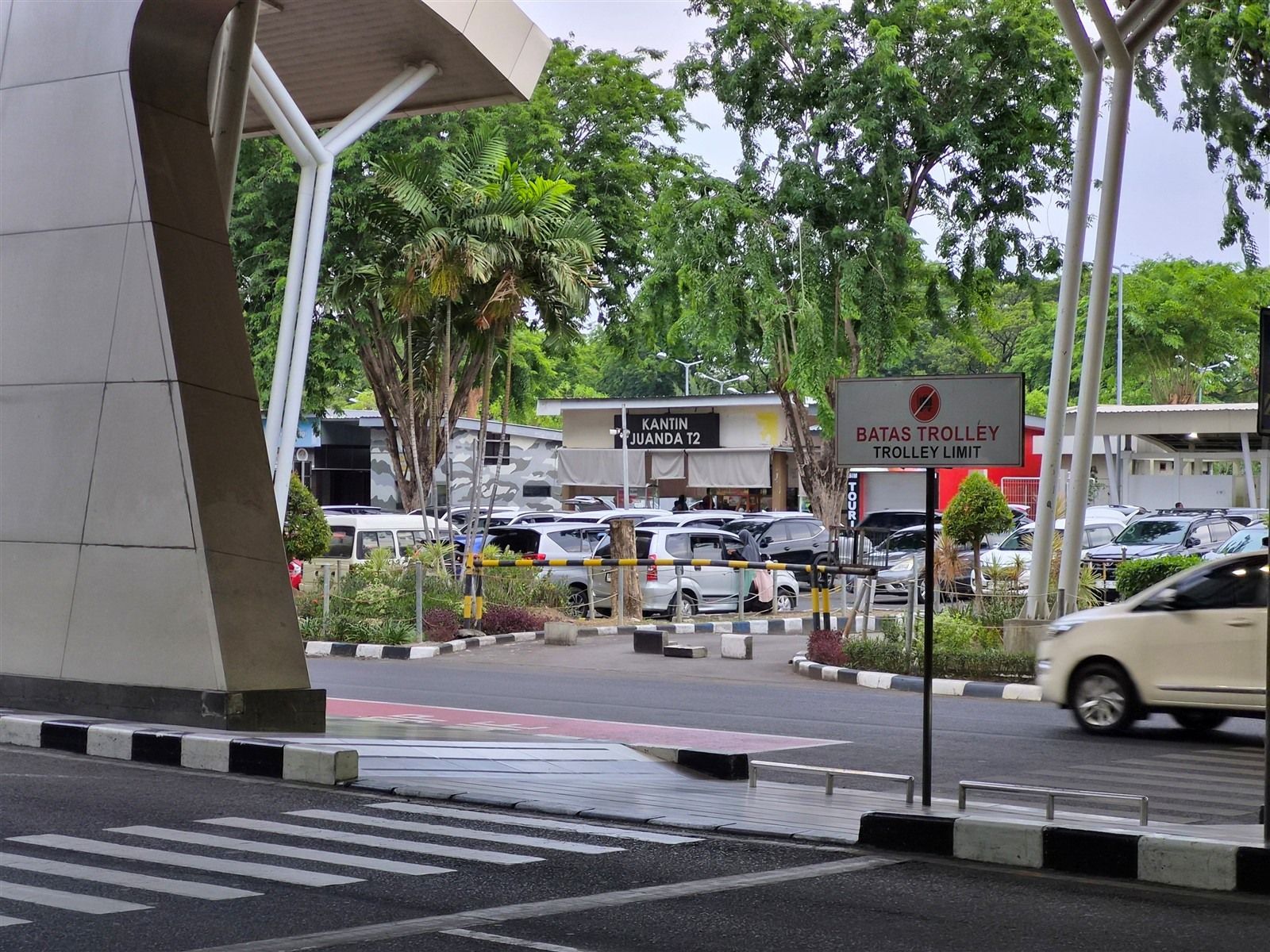
Samsung’s dedicated 3x telephoto gives the FE a useful tighter view. In this 69mm-equivalent photograph, the signs remain readable and the trees and parked cars are well defined at a normal viewing size. This is a standalone Samsung sample; there is no matching Xiaomi 3x photograph.
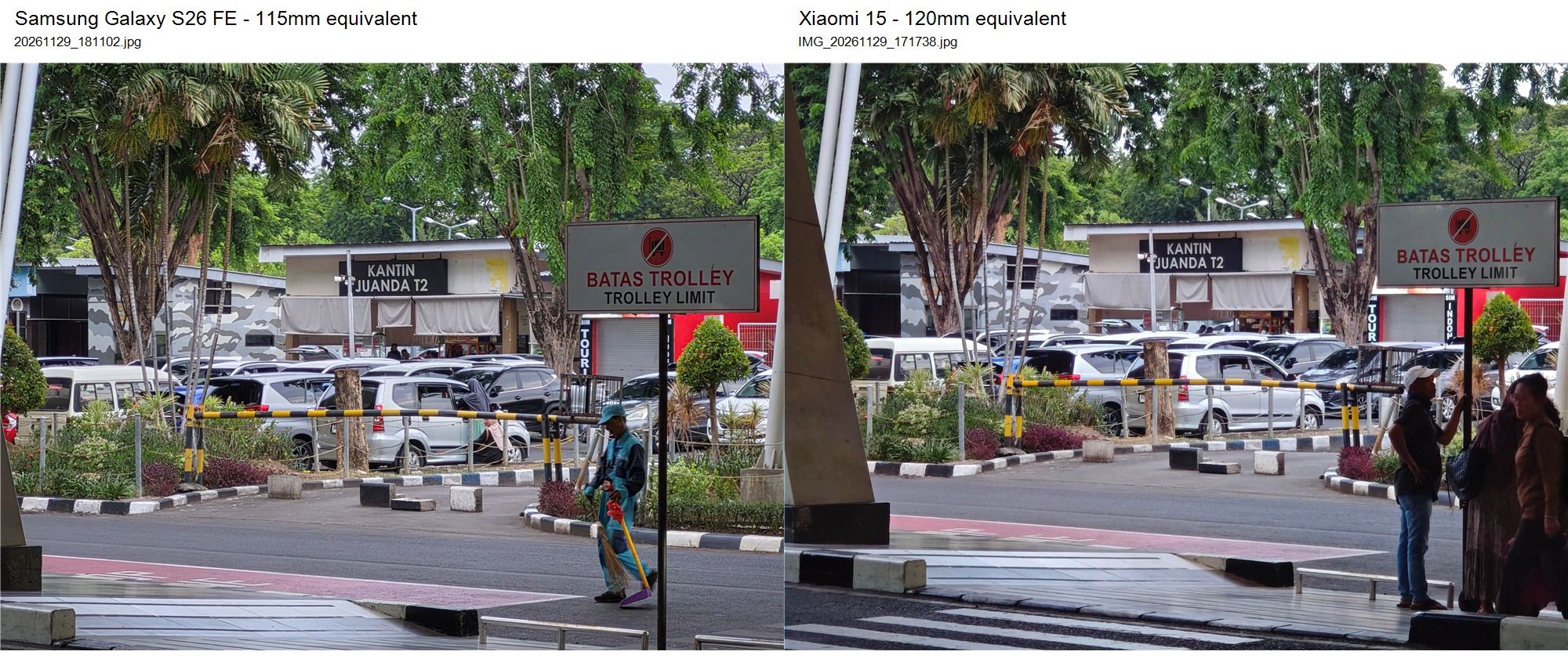
At roughly 5x, both phones still produce a useful photograph. The canteen lettering and trolley-limit sign remain easy to read, with enough definition in the cars and foliage for viewing or sharing. Samsung looks a little more restrained, while Xiaomi gives the vehicles brighter highlights. I would be comfortable using either result at this size.
The framing is close: 115mm equivalent on Samsung and 120mm on Xiaomi. The 10x pair is about 230mm on both phones, and the 30x pair about 690mm. These higher settings extend beyond Samsung’s native 3x lens and involve digital zoom.
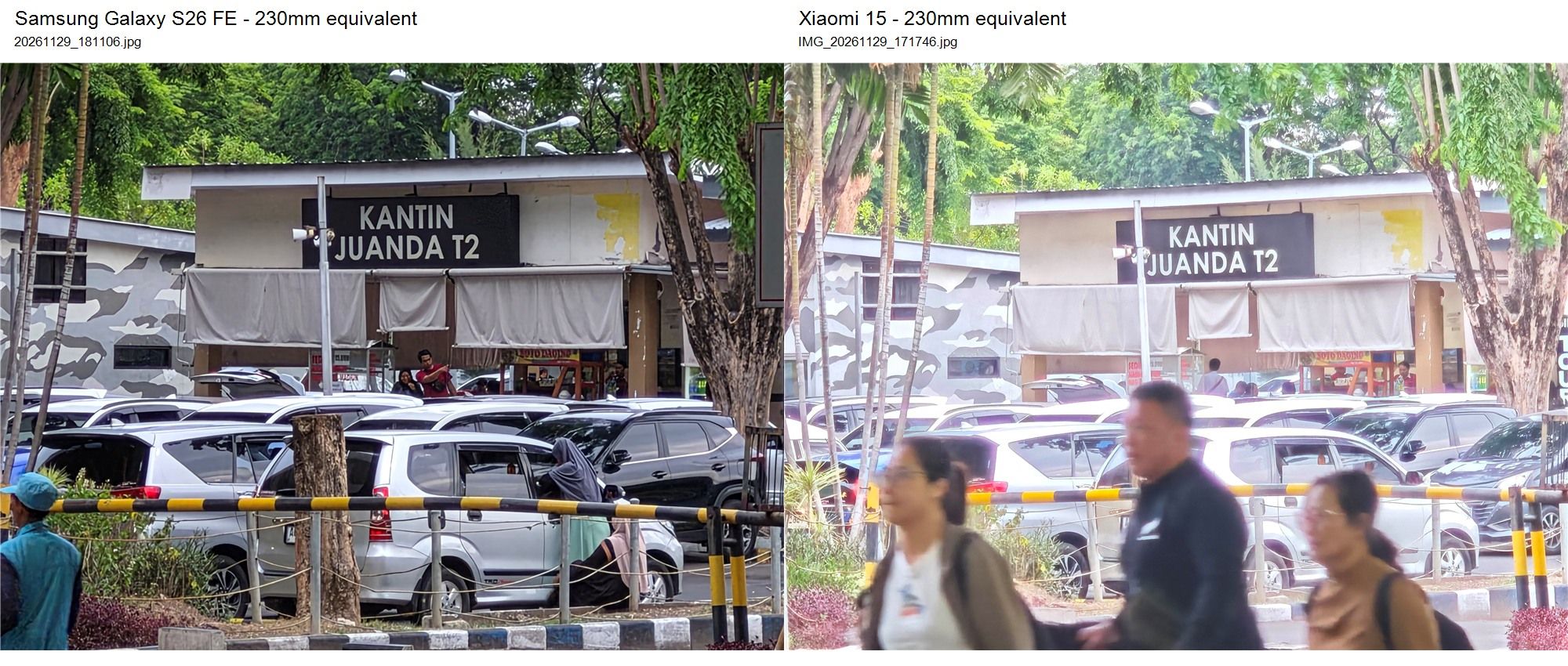
At 10x, I prefer Samsung. It keeps stronger contrast in the trees and shaded building, while Xiaomi’s frame looks conspicuously bright and washed out. Samsung makes the sign and its surroundings easier to read as a complete scene. The exposure difference is a clear advantage in this pair.
My 20x and 30x samples expose the limits of both phones. Large lettering remains recognisable, but foliage and building surfaces look increasingly processed. Samsung tends towards smoother, outlined detail, while Xiaomi looks grainier and brighter.
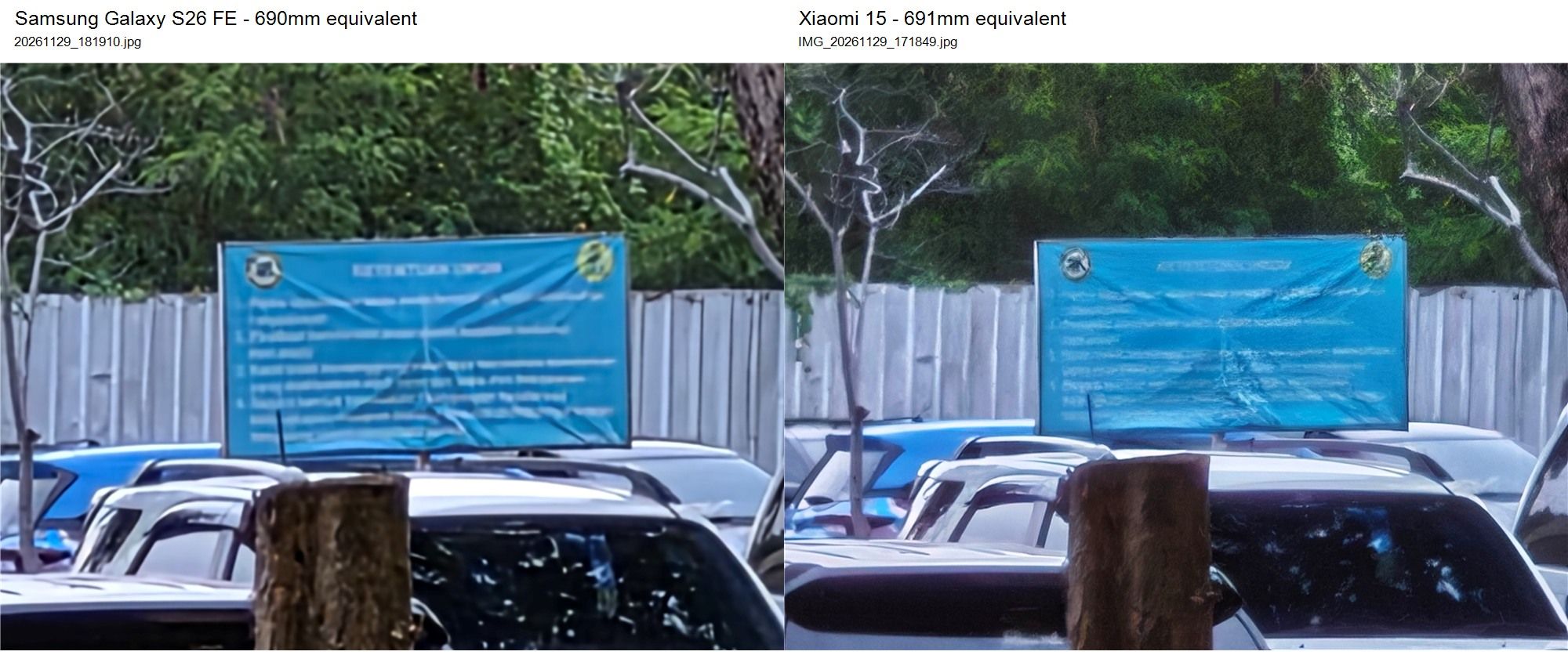
The distant blue sign at about 30x makes the practical limit clear. Both phones bring it much closer, but neither resolves its small lettering reliably. This reach can help frame a distant object; I would use lower zoom levels when fine detail matters.
Night photography
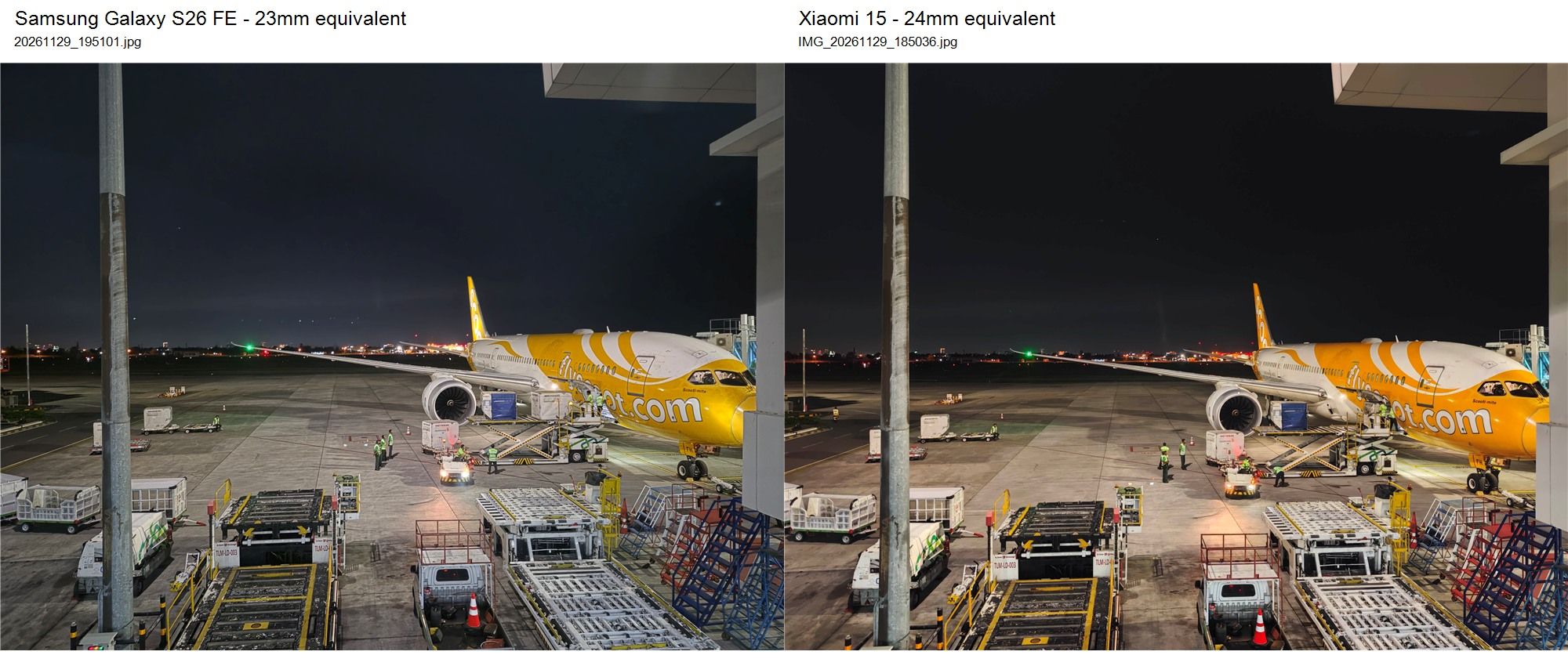
In the night airport scene, both phones capture a usable view of the illuminated aircraft and surrounding ground equipment. Samsung lifts the sky into a grey-blue background and gives the apron cooler tones. Xiaomi leaves the sky much darker and renders the aircraft’s yellow livery warmer and more saturated.
I prefer Xiaomi’s photograph here. Its darker sky makes the aircraft stand out more strongly. Samsung preserves recognisable engine blades, windows and equipment, but shows more grain on the pale fuselage when enlarged. Xiaomi smooths those surfaces more heavily. This is a preference for the rendering of this artificially lit scene; matching Night mode settings were not established.
The FE’s cameras offer a useful range, with pleasing daylight results and a practical native 3x view. Xiaomi remains my preference for several indoor subjects and the night aircraft photograph, while Samsung holds its own outdoors and produces the better-exposed 10x frame. Neither wins consistently across these scenes.
Performance and heat
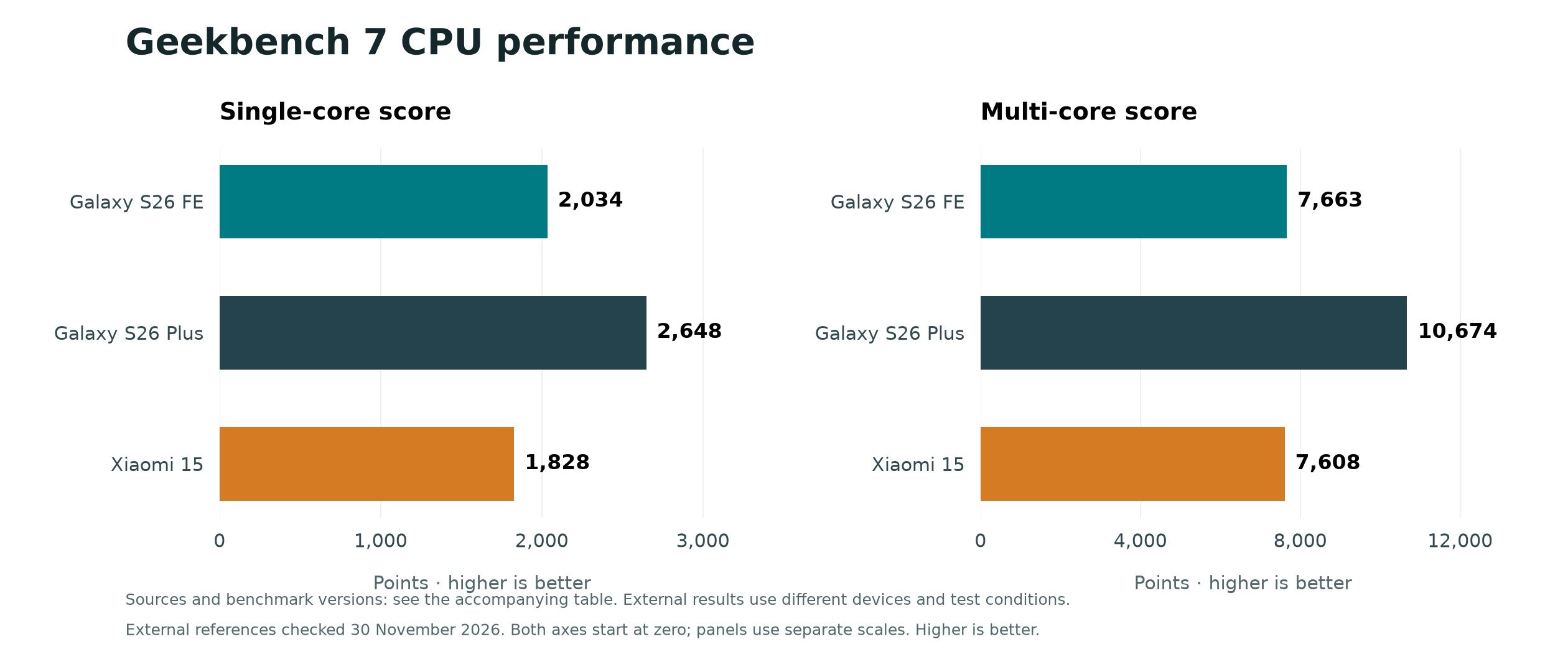
The FE’s interface feels smooth in use, and its CPU results are respectable. Our unit scored 2,034 single-core and 7,663 multi-core in Geekbench 7.1.0.
| Geekbench 7 CPU | Single-core | Multi-core | Source |
|---|---|---|---|
| Galaxy S26 FE | 2,034 | 7,663 | Our review unit, Geekbench 7.1.0 |
| Galaxy S26 Plus, Exynos 2600 | 2,648 | 10,674 | Tweakers’ testing |
| Xiaomi 15, Snapdragon 8 Elite | 1,828 | 7,608 | Geekbench device average, 30 November 2026 |
The external results come from different units, software and test conditions. Tweakers provides the S26 Plus figures, while Xiaomi’s scores are Geekbench’s published device averages checked on 30 November 2026. Geekbench confirms that its 7.0 and 7.1 CPU scores are comparable.
The S26 Plus reference is clearly ahead, giving some substance to its more expensive hardware. The FE compares well with Xiaomi’s published average: our single-core score is higher, and multi-core performance is very close. That supports the FE’s everyday capability, though it does not establish which phone will be faster in every app.
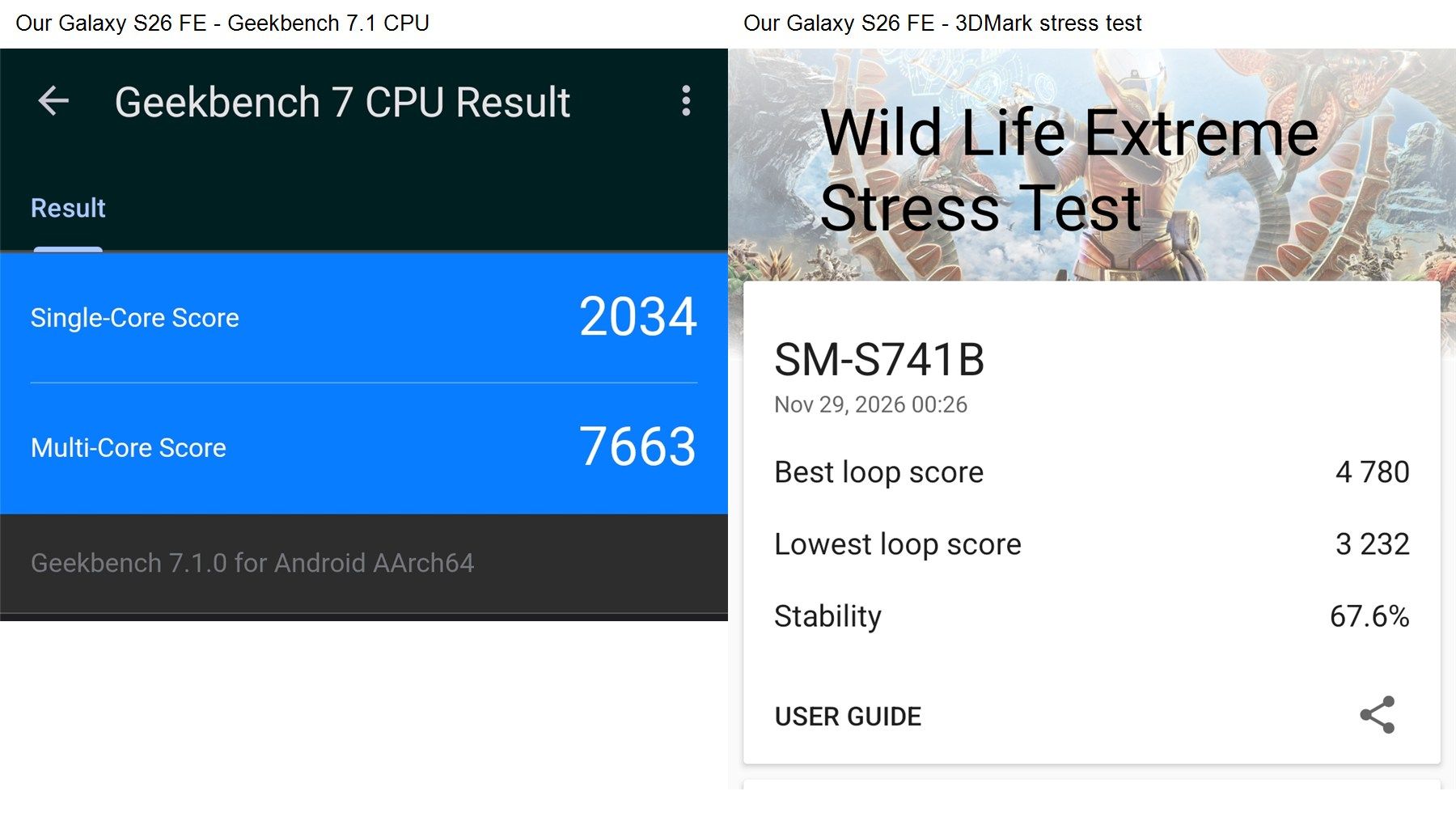
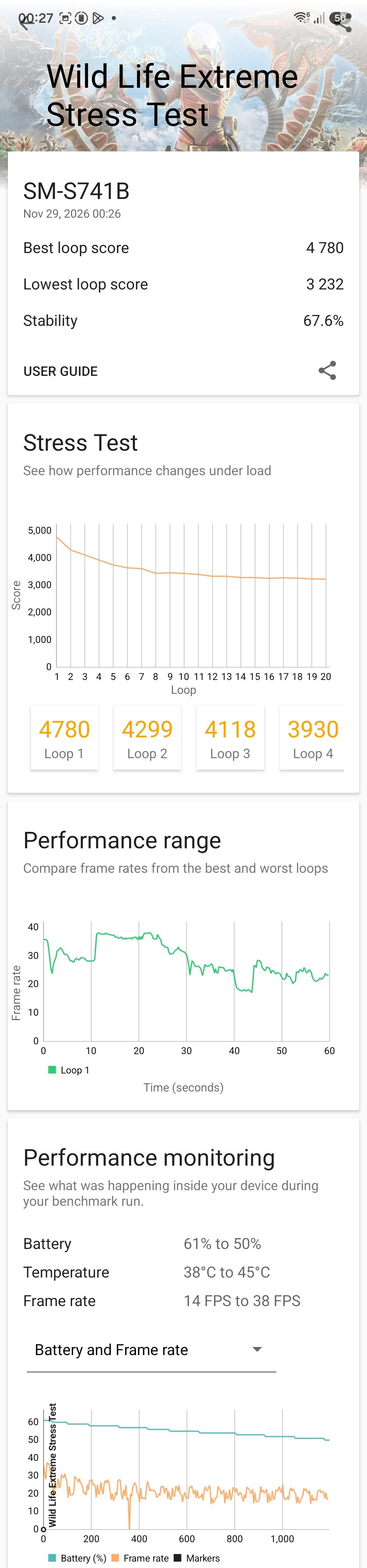
Sustained graphics performance is less reassuring. In the 3DMark Wild Life Extreme Stress Test, the FE recorded a best loop of 4,780 and a lowest loop of 3,232. Its 67.6% stability means the lowest-scoring loop retained about two-thirds of the best loop’s performance, a drop of approximately 32.4%.
Performance falls over the early loops before settling at a lower level, a pattern consistent with throttling under sustained load. The initial score therefore overstates what the phone maintains throughout the session.
For context, Notebookcheck recorded 68.7% stability for the Xiaomi 15 and 59.6% for the Exynos S26 Plus. These separately tested figures describe retention relative to each device’s own peak, so they do not rank the phones by absolute graphics speed.
The heat was what I liked least. The phone felt noticeably hot after benchmarking, and 3DMark reported temperatures of 38–45°C during the stress test. That is an app-reported reading, not an exterior surface measurement, but the warmth was apparent in my hand.
The FE can run hot when pushed. Combined with the fall in performance, that makes sustained heavy workloads less appealing, even though the phone remains enjoyable for ordinary interactions.
View the full 3DMark stress test screenshot
Battery and charging
The FE has a 4,900mAh battery and supports up to 45W wired charging and 15W wireless charging. Its capacity and wired charging rating match the S26 Plus, which supports wireless charging up to 20W. Samsung’s charging comparison
During the 3DMark stress test, charge fell from 61% to 50%, a drop of 11 percentage points. That is a demanding synthetic workload, so this result should not be used to estimate normal daily endurance.
Verdict
The Galaxy S26 FE delivers a lot of what I enjoy in an everyday phone. It is comfortable to carry, I like its minimalist styling, and the smooth AMOLED display and full stereo sound make it pleasant to use. Its cameras are versatile enough for food, travel and casual photography, with particularly pleasing results in the daytime main-camera comparison.
My Xiaomi 15 still has advantages. It handles several indoor subjects better, I prefer the look of its night aircraft photograph, and its fingerprint reader feels more dependable. Samsung’s hesitant unlocking is a repeated irritation, while the heat and performance drop after demanding benchmarks make the FE less convincing for sustained heavy use.
At the S$460 gap between their 256GB launch RRPs, the FE offers a meaningful saving over the S26 Plus. If promotions bring the Plus close in price, its higher-resolution screen, newer processor, additional RAM and ultrasonic fingerprint reader deserve a closer look. The FE makes sense for someone who wants a large, enjoyable Galaxy phone at a substantial saving. I like using it, but I would weigh the fingerprint response and heat under load carefully before choosing it.