
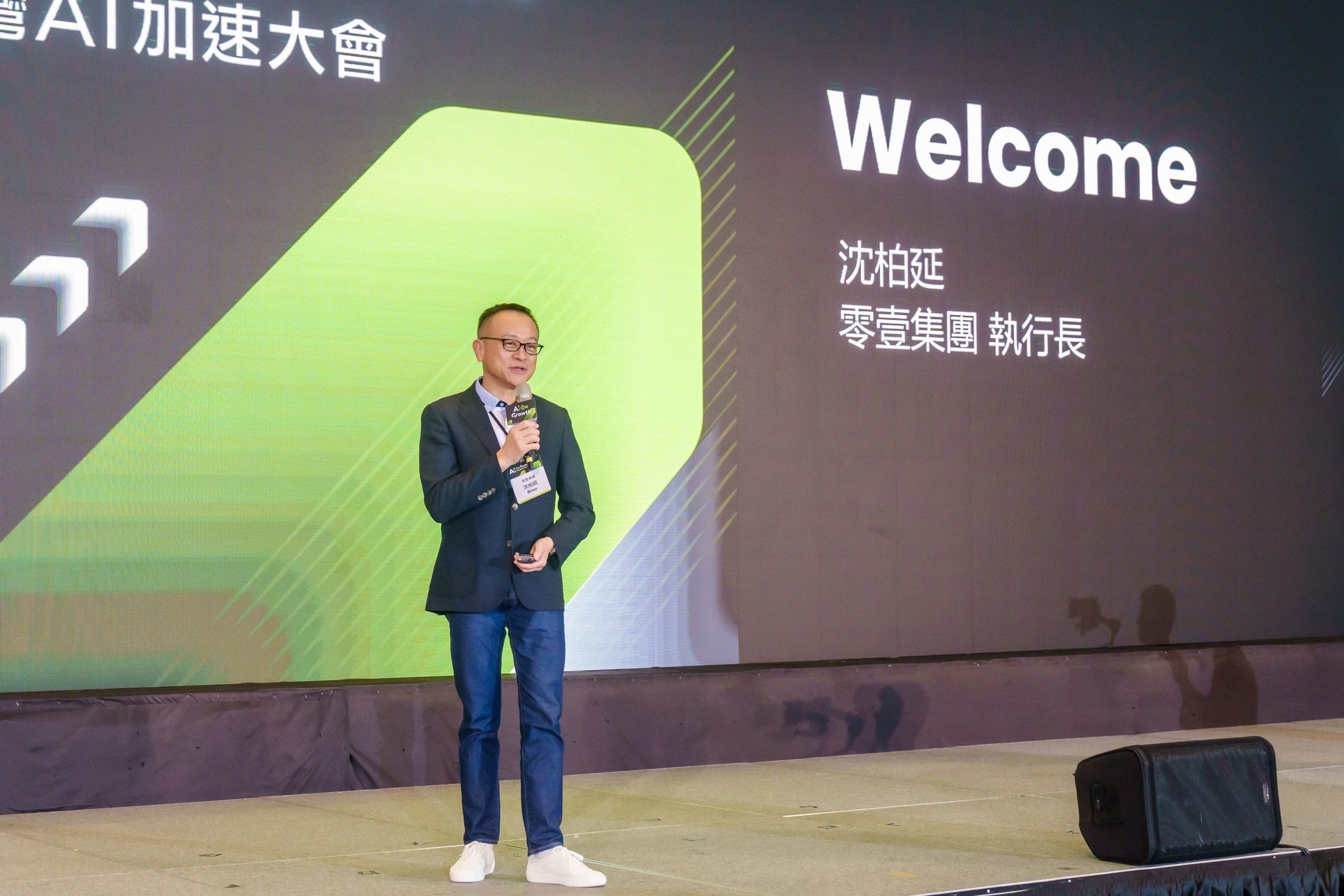
Enterprise AI has moved beyond the question of whether organisations should experiment with the technology. The harder issue is how to turn isolated proofs of concept into systems that can operate securely, reliably and at scale.
That was the central theme of AI ON Growth 2026, an enterprise technology conference organised by Zero One Group at the Taipei Marriott Hotel on 13 August. According to the organiser, the event attracted more than 1,700 registrations spanning nearly 800 companies, with 24 technology brands participating across a main forum, 20 breakout sessions and a technology showcase.
The attendance and programme figures come from TechOrange’s event report and Zero One Technology’s official recap. They have not been independently audited by The Tech Revolutionist.
Four obstacles to moving beyond AI pilots
Zero One Group CEO Shen Boyan argued that large-scale adoption depends on turning technical capability into organisational trust. He identified four recurring questions: whether enterprise data is usable, whether security risks are controllable, whether cloud, on-premises and legacy systems can be integrated, and whether AI governance can be sustained after deployment.
This framing matters because a successful demonstration does not automatically become a production service. A model may perform well in a controlled test while still lacking reliable data pipelines, identity controls, monitoring, audit trails or a clear owner when its output affects a business decision.
Zero One’s AI strategy director Jiang Huichao said companies should prioritise use cases that are frequent, measurable, supported by accessible data and bounded by manageable risk. The company’s position is that business and IT teams need a shared view of risk before infrastructure requirements can be translated into deployable systems.
Security and digital trust as deployment foundations
Lin Junxiu, director-general of Taiwan’s Administration for Digital Industries, linked enterprise AI adoption with broader efforts around digital trust and supply-chain resilience. His remarks covered zero-trust security, identity governance, digital public infrastructure and alignment with international standards, including semiconductor-equipment security and post-quantum cryptography.
Former National Security Council advisory member Li Hanming focused on traceability and resilience in critical supply chains. He argued that organisations need layered encryption, zero-trust architecture, resilient backups and fast recovery mechanisms so that operations can continue when systems are compromised.
These are policy and strategy positions presented at the event, rather than evidence that any specific implementation guarantees security. Their practical value depends on how controls are designed, tested and maintained within each organisation.
From sovereign AI to repeatable industrial deployments
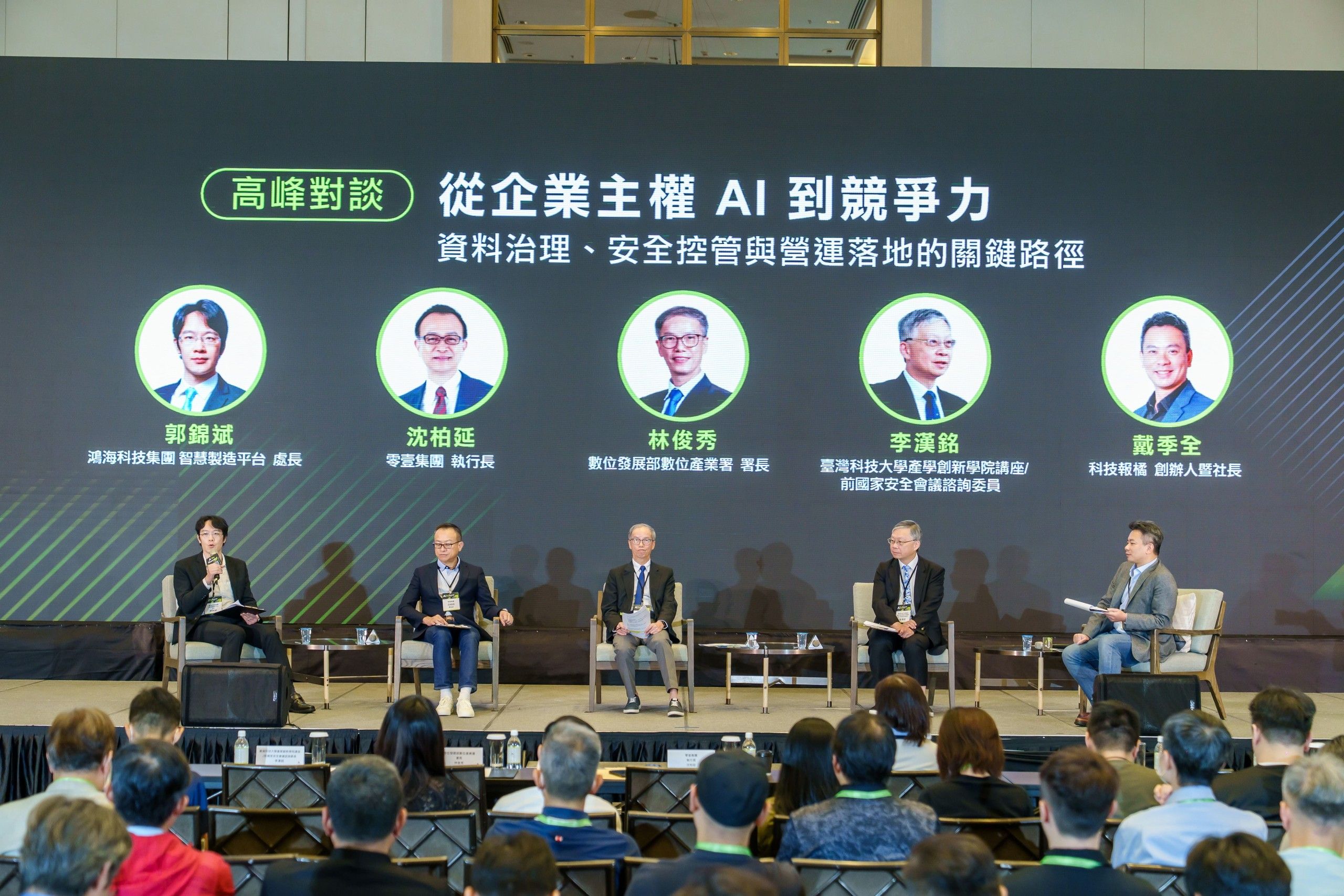
A panel featuring representatives from government, academia, Zero One Group and Foxconn examined industrial AI, sovereign AI and security governance. Lin described sovereign AI as a broader stack of computing capacity, data, talent and applications rather than simply ownership of a language model.
Foxconn smart-manufacturing executive Guo Jinbin discussed the company’s Genesis platform and a deployment principle that keeps data local while allowing capabilities and technical standards to move between sites. The approach is intended to make successful processes repeatable across factories without centralising every underlying dataset.
Shen highlighted four areas for turning fragmented AI experiments into products: standardising repeatable use cases, controlling sensitive-data workflows, placing agentic AI and retrieval-augmented generation on shared platforms, and evaluating whether a use case has enough commercial scale to justify ongoing investment.
An integration project, not a purchasing checklist
The conference divided its afternoon programme into computing infrastructure and AI-ready architecture, cloud platforms and data governance, trusted AI and cyber resilience, and intelligent applications and process redesign.
That structure reflects a useful reality: buying accelerators or subscribing to a model does not by itself create a production AI capability. Enterprises still need networks, storage, applications, APIs, access controls, operational ownership and a way to measure whether the system improves cost, speed, quality or risk.
Zero One Group used the event to position itself and its partners as integrators across those layers. That is a commercial perspective and should be understood as such, but the underlying deployment issues—data quality, security, legacy integration and governance—are widely applicable to organisations attempting to scale AI.
Sources: TechOrange and Zero One Technology.